The working principle of a CNC hydraulic press brake machine
Table of Content
This post is also available in:
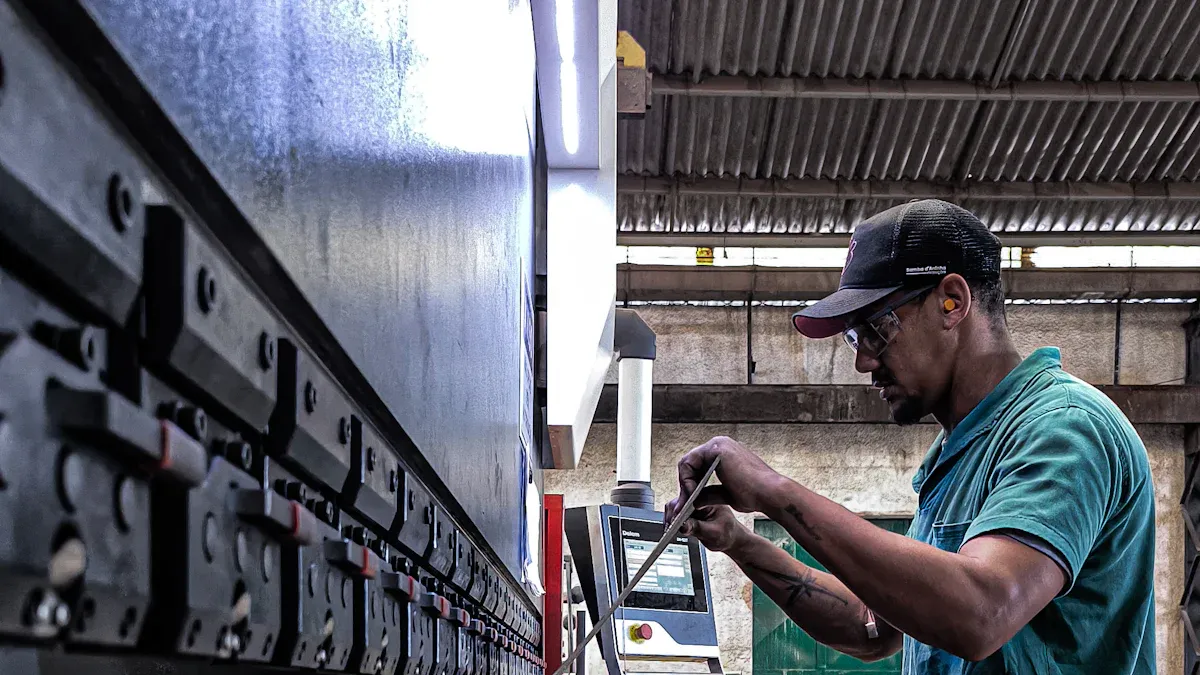
You use a CNC hydraulic press brake machine with computer programming and hydraulic power. This helps you bend metal sheets very accurately. You can do the same bend many times without mistakes. The CNC system moves the ram and tools. The hydraulic system gives strong and steady force. Here are some differences between CNC hydraulic systems and older machines:
| Feature | CNC Hydraulic Systems | Traditional Press Brake Machines |
|---|---|---|
| Precision and Repeatability | Very accurate and repeatable | Not as accurate, more mistakes |
| Complex Bending Sequences | Can do hard bending steps | Can only do easy bends |
| Control | Advanced control of ram movement | Simple control methods |
If you know the main parts and how they work together, you can use your press brake machine better.
Key Takeaways
- CNC hydraulic press brake machines are very precise and repeat actions well. They help make accurate bends with very few mistakes.
- The hydraulic system runs the machine by using oil pressure. This helps bend metal sheets well. It works for many kinds of materials.
- CNC control systems make the bending process automatic. This lowers mistakes and saves time. You can change settings and program it quickly.
- Regular maintenance is important for the machine to work well. You need to check oil levels and look at the tooling often. This helps the machine last longer.
- These machines can do many jobs and are used in many industries. They are used in car making, airplane building, and furniture making.
What Is a Press Brake Machine
Definition
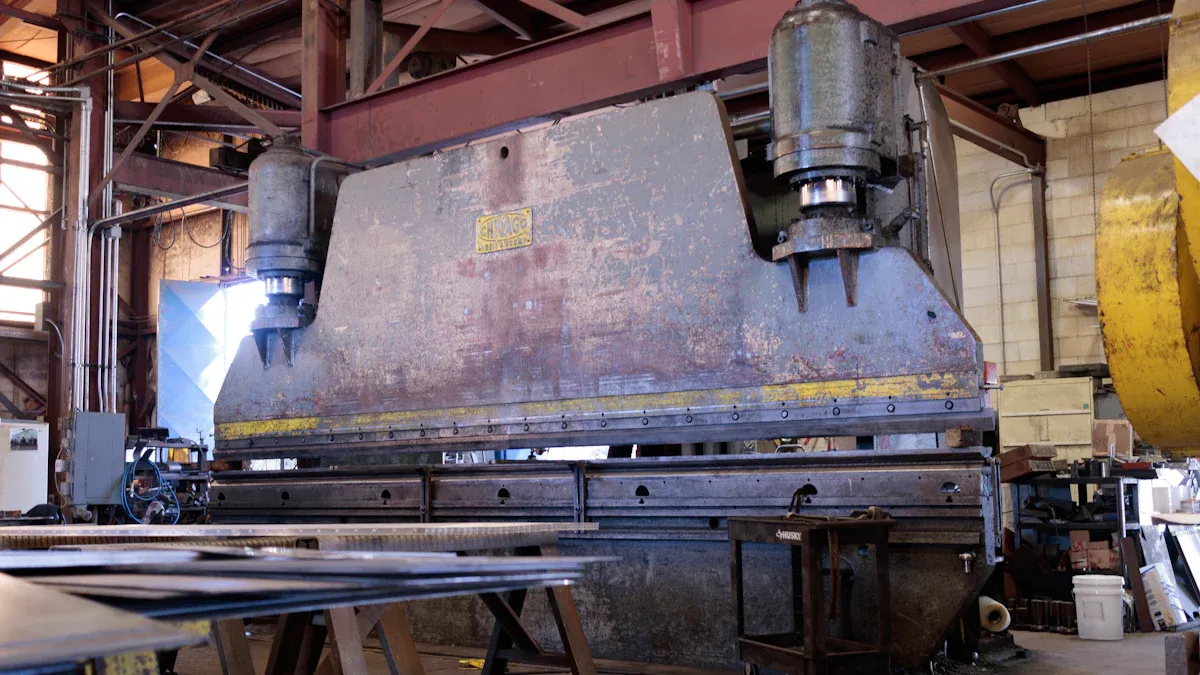
A press brake machine bends and shapes cold metal sheets. You can use it with other materials too. It works with cardboard, plastic, rubber, and leather. The machine follows strict safety and quality rules. These rules come from international standards like ISO.
- The press brake machine can handle cold metal and sheet materials.
- You can trust it to work safely and accurately.
- Makers build these machines to meet safety rules around the world.
Purpose
A press brake machine bends metal sheets into exact shapes. It uses a punch and die system. The punch pushes the metal into the die. This makes the metal bend. CNC technology helps you control the process. You get the same results every time and waste less material. When you use the machine, you press the metal sheet with force. The punch moves down and bends the sheet in the die. You can use different thicknesses and types of metal. The press brake machine helps you make many shapes for projects. You can change the force and tools for each material. This makes the press brake machine useful in metal shops. You get precise bends and can make quality products again and again.
Main Components
CNC Control
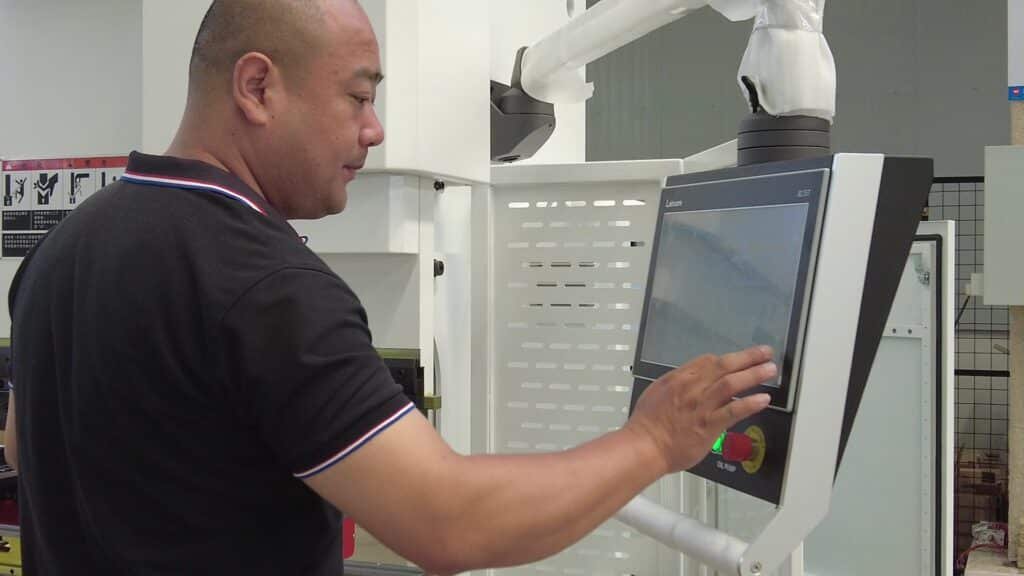
You use the CNC control system to program and automate the bending process. This system lets you set exact measurements for each bend. The CNC control moves the ram and backgauge with high precision. It uses sensors and feedback to check positions in real time. This helps you make every part the same, even if you bend many pieces.
- CNC systems let you adjust settings quickly.
- They reduce mistakes by automating steps.
- You save time and material because the machine repeats each bend perfectly.
Hydraulic System
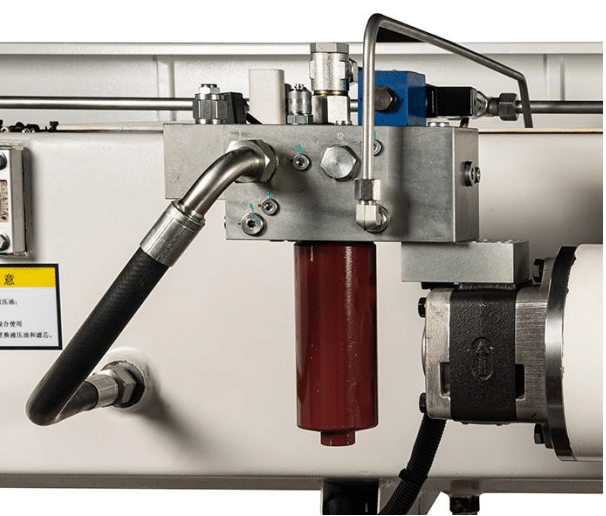
The hydraulic system gives the press brake machine its power. It uses an electric motor to run a hydraulic pump. The pump moves oil from a reservoir through valves and cylinders. This oil pressure pushes the ram down to bend the metal.
Here is a table showing the main parts of the hydraulic system:
| Feature | Description |
|---|---|
| Power Source | Electric motor runs the hydraulic pump. |
| Hydraulic Pump | Changes mechanical energy into hydraulic power. |
| Reservoir | Stores and cleans hydraulic oil. |
| Valves | Control oil direction, speed, and pressure. |
| Hydraulic Cylinders | Turn hydraulic energy into force to move the ram. |
You need to check the oil and filters often to keep the system working well.
Frame and Ram

The frame holds all the parts together and keeps the machine steady. You can find different frame types, like C-frame, H-frame, and O-frame.
- C-frame: Easy to use for small parts, but less strong.
- H-frame: Very strong, good for big jobs.
- O-frame: Best for high-precision work.
The ram moves up and down to press the metal into the die. A strong frame and ram help you get accurate bends every time.
Backgauge
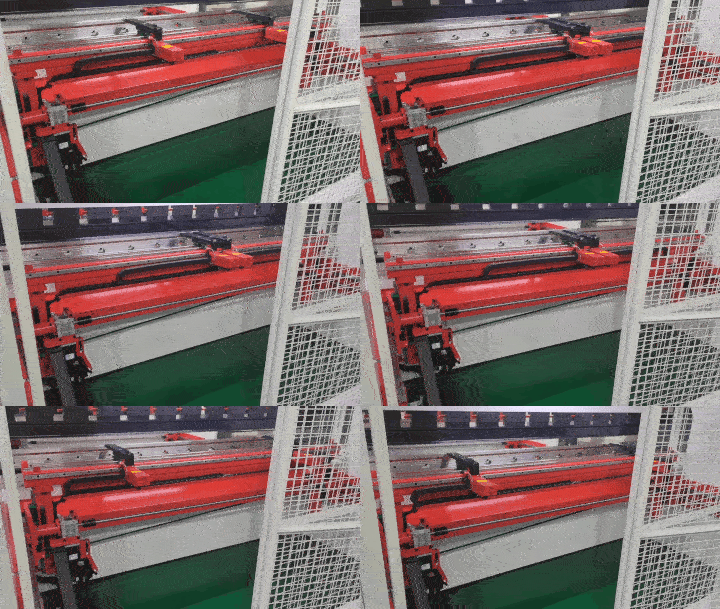
The backgauge sets the position of your metal sheet before each bend. You use it to make sure every piece lines up the same way.
- The backgauge acts as a guide for your workpiece.
- It helps you make many parts with the same size and shape.
- In CNC machines, the backgauge moves automatically for complex bends.
This tool is very important in industries like aerospace and automotive, where you need perfect results.
Tooling
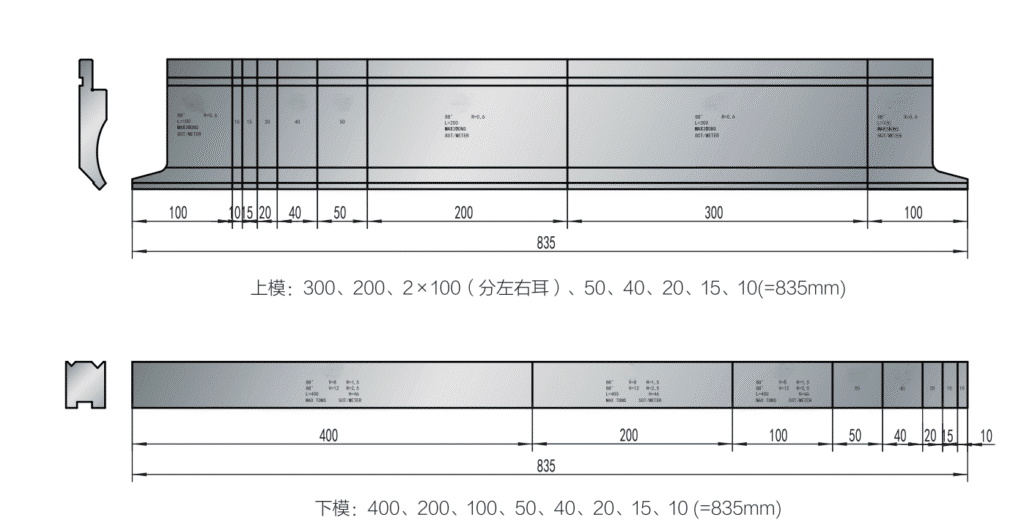
Tooling includes the punch and die. You choose different punches and dies for different bends.
Here are some common types:
| Tool Type | Description |
|---|---|
| Standard Punch | Good for thick materials and strong bends. |
| Acute Angle Punch | Makes sharp, short bends. |
| Radius Top Punch | Used for rounded bends. |
| Single V Die | Works for many bending jobs. |
| Multi V Die | Lets you bend different angles and thicknesses. |
You can change the tooling to make many shapes with your press brake machine.
When you use all these components together, you get precise, repeatable bends. The CNC control, hydraulic system, frame, ram, backgauge, and tooling all work as a team to help you make high-quality metal parts.
Working Principle
Programming
You start by telling the press brake machine what to do. The CNC control panel helps you with each step. First, turn on the machine and let it get ready. The machine checks itself and finds its starting spots. Next, type in the kind of metal you will use. You also enter how thick it is and how strong it is. This helps the machine know how much force to use. Then, choose the order for each bend. Try to pick a way that saves time and work. After that, set the bend angles, force, and where the backgauge should go. You also add any extra space needed. Before you bend real metal, run a test on the screen. The CNC system shows you how the bends will go. This lets you find mistakes before you start.
Tip: Always use the test run to catch errors. This saves you time and keeps you from wasting metal.
Setup
Before you bend anything, you need to get the press brake machine ready. The table below shows the main steps and what you should do:
| Step | Description |
|---|---|
| 1 | Gather tools like calipers, angle finders, and safety gear. |
| 2 | Clean the machine and check all the parts. Make sure everything works right. |
| 3 | Set the machine for your job. |
| 4 | Put out tools to measure and check the machine. |
| 5 | Check if the ram is straight and even. This helps you get good bends. |
| 6 | Set the backgauge so the metal sits in the right spot. |
| 7 | Try a few test bends and fix things if needed. |
| 8 | Write down all your settings and changes in a notebook. |
| 9 | Plan to check and care for the machine often. This keeps it working well. |
Note: A good setup stops mistakes and keeps you safe while you work.
Bending Process
The press brake machine uses hydraulic power to bend metal. Here is how it works: The hydraulic system has pumps, tanks, valves, and cylinders. These parts work together to make the machine move. Each cylinder has a piston inside. When oil goes in, the piston moves and makes force. You put the metal sheet on the table. The punch and die touch the metal. The system sends oil into the cylinders. The piston pushes down, and the punch bends the metal into the die. You can change the angle, force, and speed with the CNC control.
The CNC system controls every move. It checks the ram, backgauge, and bending force. The CNC makes small changes as you work. This helps you get perfect bends every time.
Safety Reminder: New press brake machines have safety features. These include light curtains, two-hand controls, and emergency stop buttons. They help keep you safe by stopping the machine if something is wrong.
Monitoring
You need to watch the bending process to keep your work good. New press brake machines use special systems to help you:
| Monitoring System | Description |
|---|---|
| CNC Systems with Laser-Guided Alignment | These give you feedback on bend angles and alignment. You can fix things fast if needed. |
| AI-Powered Adaptive Control Systems | These use smart programs to check the material and change settings before mistakes happen. |
| IoT-Enabled Predictive Maintenance | These connect to networks and check the machine’s health all the time. You get alerts before problems stop your work. |
You can also fix problems if you see them. If your bends are not even, check if the tooling is lined up. Make sure the metal is in the right place. If the ram shakes, look for air in the oil or change the bending gain. Always watch the machine’s sensors and feedback.
Pro Tip: Watch the machine often and fix problems fast. This helps you keep your press brake machine working well.
Advantages and Uses
Precision
A CNC hydraulic press brake machine gives you very good accuracy. It can bend metal with a small error of about ±0.5°. The machine also moves parts to the right spot within ±0.1 to ±0.2 mm. This means your parts will fit together just right. You use tools like digital protractors, calipers, and laser alignment systems to check if the bends are correct. These tools help you measure the angle and size for each bend. You can make sure every bend is the same. This stops mistakes and saves material.
- Typical bend angle tolerance: ±0.5°
- Linear positioning tolerance: ±0.1 to ±0.2 mm
Efficiency
A CNC hydraulic press brake machine helps you work faster. It is much quicker than a manual machine. You can save many bending programs in the machine. You can change jobs fast without wasting time. The machine sets up by itself and changes tools quickly. This saves time when you have lots of work. In big factories, this speed helps you finish jobs on time.
| Machine Type | Descent Speed (mm/s) | Return Speed (mm/s) | Cycle Time Reduction | Throughput Increase |
|---|---|---|---|---|
| CNC Hydraulic Press | Up to 200 | 120 | Significant | High |
| Manual Press Brake | Slower | Slower | Minimal | Low |
- Faster descent, return, and backgauge speeds
- Shorter cycle times and higher throughput
Applications
CNC hydraulic press brake machines are used in many fields. You can use them to make furniture, farm tools, electrical parts, and building items. They also help make car parts, airplane panels, and HVAC system shells.
| Industry | Applications |
|---|---|
| Furniture manufacturing | Bends metal parts for frames and decorative elements |
| Agricultural equipment | Makes tractor and machinery parts |
| Electrical | Forms enclosures and hydraulic tanks |
| Construction | Produces cabinets, ductwork, and grilles |
| Automotive | Bends large panels and chassis components |
| Aerospace | Shapes aircraft panels and engine covers |
| HVAC systems | Makes shells for air conditioning units and ductwork |
Choosing a Press Brake Machine
You need to think about a few things before you buy a press brake machine:
- Make sure it can handle your material thickness.
- Check if it can bend the size of your workpiece.
- Look for good precision and control to stop errors.
- Pick a machine that works fast for your needs.
- Make sure it fits in your shop space.
- Think about how much energy and noise it makes.
- See if the maker gives good help and service.
- Choose one that fits your budget and has the features you want.
Tip: Pick a machine with the right features for your work. This helps you get the best results.
When you use CNC control and hydraulic force together, you get strong results. This helps you bend metal very accurately. You can use the machine for many different jobs. It works in lots of industries. Here is how these features help:
| Feature | Description |
|---|---|
| Programmable Control Systems | You can set the exact bend and size for each job. |
| Material Versatility | It works with steel, aluminum, copper, and more. It does not matter how thick the metal is. |
| Automated Tasks | The machine bends and shapes metal in one step. This makes your work faster. |
When picking a machine, think about what metal you will use. Also, think about the size of your job and safety rules. You can choose special options like better CNC controls or extra safety parts. New things like AI and robotic arms can make your work safer and easier.
FAQ
What safety features do CNC hydraulic press brake machines have?
You get safety features like light curtains, emergency stop buttons, and two-hand controls. These features help protect you from accidents. Always check these systems before you start working.
How often should you maintain your press brake machine?
You should check oil levels, clean filters, and inspect tooling every week. Schedule a full inspection every month. Regular care helps your machine last longer and work better.
Can you bend different metals with one machine?
Yes, you can bend steel, aluminum, copper, and more. You only need to change the tooling and adjust the settings for each metal type. Always check the machine’s limits before you start.
What is the main benefit of CNC control?
CNC control lets you program exact bends and repeat them with high accuracy. You save time and reduce mistakes. This system helps you make complex shapes easily.