What Is an Electric Press Brake and How Does It Work
Table of Content
This post is also available in:
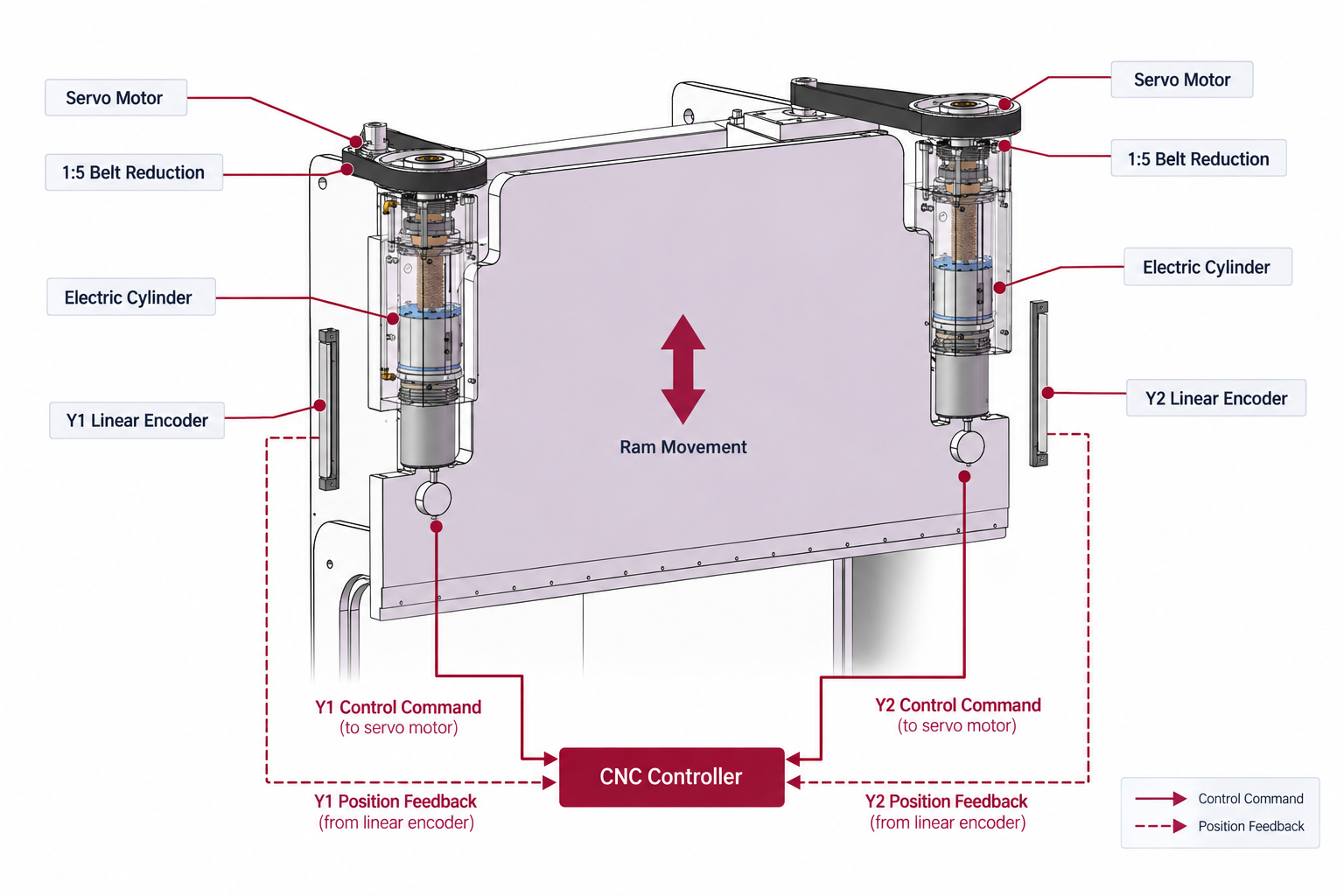
A servo electric press brake uses high-performance servo motors and electric cylinders to control ram movement without a conventional hydraulic drive system. Dual servo drives work with Y1/Y2 linear encoder feedback to provide precise, synchronized ram positioning for accurate and repeatable bending.
Key Takeaways
- Electric press brakes use servo motors for precise bending, leading to higher accuracy and energy efficiency compared to hydraulic models.
- These machines require less maintenance due to fewer moving parts and the absence of hydraulic fluids, reducing operational costs.
- Operators benefit from quick setup times and intuitive controls, which enhance productivity and minimize errors during the bending process.
- Safety features like light curtains and two-hand controls ensure a safer working environment, complying with strict regulations.
- Choosing the right electric press brake involves assessing material types, bending requirements, and production volume to match specific needs.
Meca Servo Electric Press Brake Overview
Press Brake Machine vs. Hydraulic Models
Electric Press Brake or Hydraulic Press Brake Which Should You Choose
The press brake machine has evolved over time, with electric and hydraulic models representing two main types. Each type offers unique advantages and suits different applications. The table below highlights the main differences between hydraulic and electric press brakes:
| Feature | Hydraulic Press Brakes | Electric Press Brakes |
|---|---|---|
| Force Generation | Uses hydraulic fluid to exert force | Uses servo motors for precise control |
| Energy Efficiency | Requires continuous power for operation | Consumes power only during bending |
| Maintenance Requirements | Higher due to hydraulic fluid and seals | Lower, as they do not use hydraulic fluid |
| Bending Accuracy | Dependent on hydraulic system stability | Higher accuracy and repeatability |
| Suitability for Applications | Ideal for heavy-duty tasks and thicker materials | Better for precision tasks, less force capacity |
Hydraulic press brakes remain popular for heavy-duty work and thick materials. They offer robust performance and versatility. However, they require frequent oil changes and checks for leaks, which increases maintenance time and costs. Electric press brakes, on the other hand, excel in precision and energy efficiency. They operate quietly, producing minimal noise during use. When idle, electric models are almost silent, while hydraulic machines generate constant noise.
In recent years, many manufacturers have shifted toward electric and hybrid press brakes. This change comes from the need for faster, more energy-efficient, and precise machines. The adoption rate of electric press brakes has grown, especially in industries facing skilled labor shortages. These machines are easier to operate and maintain, making them attractive for modern metal fabrication shops.
- Electric press brakes dominate the high-precision, low-tonnage segment.
- Hybrid models combine the best features of hydraulic and electric systems, offering both power and efficiency.
- Modern hydraulic press brakes have improved, but electric models still lead in accuracy and energy savings.
Note: Electric press brakes help reduce workplace noise and environmental impact, making them a smart choice for companies focused on sustainability.
How Electric Press Brake Works
Step-by-Step Bending Process
The electric press brake follows a precise sequence during bending operations. Operators rely on the working principle of controlled bending to achieve accurate results. The process begins with material loading, alignment, and securing. The operator places the metal sheet onto the press brake, ensuring it sits correctly and remains stable. Next, the operator sets up the bending machine by selecting the right tooling and adjusting parameters such as bending angle and force.
The bending operation starts when the punch moves downward, pressing the sheet metal into the die. Electric motors drive this movement, providing consistent force and speed. Operators monitor the process to maintain quality. After bending, inspection and adjustments take place. The operator checks the finished part against specifications and makes corrections if necessary.
Tip: Electric press brakes do not use hydraulic fluids. This feature eliminates the risk of leaks and reduces environmental impact.
The following table summarizes the main steps in the bending process:
| Step | Description |
|---|---|
| Material Loading and Alignment | Place and secure the metal sheet on the press brake |
| Setting Up the Press Brake | Select tooling, adjust bending angle and force |
| Bending Operation | Punch bends the sheet metal, driven by electric motors |
| Post-Bending Inspection | Check the part and make adjustments if needed |
Role of Servo Motors and Electric Drive
Servo motors play a vital role in the operation of an electric press brake. These motors deliver unmatched energy efficiency and lightning-fast cycle times. Two AC-servo motors control the approach, bending, and return speeds, resulting in fast part cycle times. The electric drive system ensures exceptional bend accuracy, with bending angle errors within ±0.5°, compared to ±1° for hydraulic press brakes.
Operators benefit from quick setup times and minimal maintenance requirements. Precision reduces material waste and rework, which maximizes productivity. The fast, accurate backgauge, driven by servo motors, allows for precise positioning and repeatability in production. Adjustable bending speed accommodates different materials, thicknesses, and lengths, ensuring optimal results for every job.
The electric press brake stands out for its clean operation. The absence of hydraulic fluids means fewer environmental hazards and lower maintenance costs. The working principle relies on electric motors for controlled bending, making the press brake a reliable choice for modern fabrication shops.
Note: The electric press brake consumes power only during active bending. This feature leads to significant energy savings and quieter operation.
The combination of advanced servo motors and electric drive systems enables the electric press brake to deliver high bending accuracy, repeatable results, and efficient performance. Manufacturers choose this technology for tasks that demand precision and sustainability.
Main Components of Electric Press Brake
Frame and Structure
The frame and structure of an electric press brake provide stability and support during bending operations. Manufacturers use high-strength, low-alloy steels such as Q235 and Q345 to ensure durability. The melting quality of steel and internal uniformity of thick plates play a critical role in maintaining the integrity of the press brake. These features help prevent structural failure and extend the lifespan of the press brake machine.
| Material Type | Description |
|---|---|
| High-strength, low-alloy steels | Commonly used materials like Q235 and Q345, known for their strength and durability. |
| Melting quality | Critical for ensuring the integrity and performance of the steel used in press brake structures. |
| Internal uniformity of thick plates | Important for maintaining stability and reducing the risk of structural failure. |
Electric Drive System
The electric drive system sets the electric press brake apart from traditional models. Servomotors only consume energy during active operation, which lowers overall energy consumption. Hydraulic systems operate continuously and use more electricity. The electric drive system distributes force evenly, improving precision and reducing errors. This design can reduce energy expenses by about 30% and lower maintenance costs. The expected lifespan of the electric drive system in modern electric press brakes ranges from 15 to 25 years.
| Machine Type | Expected Lifespan (Years) |
|---|---|
| Electric Press Brake | 15–25 |
- Electric press brakes use servomotors for efficient operation.
- The system improves bending accuracy and reduces errors.
Control Panel and Automation
Modern electric press brakes feature advanced control panels with automation. Automated axis control (Y1/Y2, X, R, Z1/Z2) and automatic tool clamping help operators set up jobs quickly. Real-time angle measurement and compensation ensure precise bends. Safety automation, such as laser guards and DSP systems, protect users. Optional robotic integration and auto gauging further reduce operator error and improve consistency. CNC press brake models use pre-programmed settings to maintain uniform results across production runs.
| Evidence | Description |
|---|---|
| Automated systems minimize human intervention | Reduces common sources of errors in manual operations. |
| Real-time monitoring and automated alerts | Helps operators quickly identify and address potential issues. |
| Pre-programmed settings for bending | Ensures accurate bends, reducing errors like incorrect angles. |
| Consistency across production runs | Maintains high standards and uniform results. |
| Predictability of production outcomes | Enhances planning and scheduling of resources. |
Safety Features
Safety features protect operators and ensure compliance with regulations. Electric press brakes in the United States must meet OSHA and ANSI standards, while European models follow the Machinery Directive and EN 12622. Common safety devices include awareness barriers, barrier guards, light curtains, two-hand controls, and laser AOPD systems. These features prevent injuries and stop the press brake if a hazard is detected.
| Region | Regulatory Body | Standard/Directive | Description |
|---|---|---|---|
| United States | OSHA | Machine Guarding Standards (29 CFR 1910.211-219) | Mandates the use of guards and safety devices to prevent injuries from moving parts. |
| OSHA | Lockout/Tagout Procedures (29 CFR 1910.147) | Ensures machines are properly shut off during maintenance to prevent accidental activation. | |
| ANSI | ANSI B11.3-2012 | Outlines safety requirements for power press brakes, including point-of-operation guarding. | |
| European Union | EU | Machinery Directive (2006/42/EC) | Sets essential health and safety requirements for machinery, including press brakes. |
| EU | EN 12622 | Specifies safety requirements for the design and construction of press brakes. |
Tip: Safety features like light curtains and two-hand controls help prevent common accidents during press brake operation.
Types of Electric Press Brakes
Servo-Electric Press Brake
Servo-electric press brakes use advanced servo motors to control the bending process. These motors deliver precise force and speed, which helps operators achieve accurate results. The servo system responds quickly to commands from the control panel. This technology reduces energy consumption because the motors only run during active bending. Many manufacturers prefer servo-electric models for jobs that require high precision and repeatability.
Operators find the setup process straightforward. The cnc press brake often includes automated features, such as programmable backgauges and angle measurement systems. These features improve consistency and reduce human error. Servo-electric press brakes work well for thin to medium sheet metal. They produce less noise than hydraulic models. Maintenance needs remain low because the design eliminates hydraulic fluids and gear pumps.
Tip: Servo-electric press brakes help reduce energy costs and support sustainable manufacturing practices.
Hybrid Electric Press Brake
Hybrid electric press brakes combine the strengths of electric and hydraulic systems. These machines use servo motors for precise control and hydraulic assistance for extra bending power. The hybrid design allows the press brake to handle thicker materials and higher tonnage applications. Operators benefit from energy efficiency because the system shuts off when not in use.
The following table compares hybrid electric press brakes with fully electric and hydraulic models:
| Feature | Hybrid Electric Press Brakes | Fully Electric Press Brakes | Hydraulic Models |
|---|---|---|---|
| Energy Efficiency | Shuts off when not in use | Shuts off when not in use | Continuous operation |
| Hydraulic Assistance | Yes | No | Yes |
| Gear Pumps | No | No | Yes |
| Bending Power | Up to 250 metric tons | Varies | Varies |
Hybrid electric press brakes offer high bending power without the drawbacks of traditional hydraulic systems. The absence of gear pumps reduces maintenance and noise. Operators can use these machines for a wide range of applications, from light sheet metal to heavy structural components. The press brake machine adapts to different production needs and supports flexible manufacturing.
Note: Hybrid electric press brakes provide a balance between precision, power, and efficiency. Many fabrication shops choose hybrid models for their versatility and reliability.
Manufacturers continue to develop new press brake technologies. Both servo-electric and hybrid electric press brakes play important roles in modern metalworking. Each type offers unique benefits for different production environments.
Advantages and Disadvantages
Benefits of Electric Press Brake
Many manufacturers recognize the advantages of electric press brakes in modern metal fabrication. These machines offer significant energy savings and lower operational costs. Operators experience reduced maintenance needs because electric press brakes use fewer moving parts and do not require hydraulic fluids. The equipment lifespan often increases when shops upgrade to electric models. The following table highlights the main benefits:
| Benefit | Description |
|---|---|
| Energy Savings | Electric press brakes consume less energy than hydraulic systems, leading to lower operational costs. |
| Reduced Maintenance Needs | They require less maintenance due to simpler diagnostics and reduced handling of hydraulic fluids. |
| Improved Equipment Lifespan | Upgrading to electric models can extend the lifespan of existing equipment, enhancing overall efficiency. |
Enhanced precision and quick setup times also support high-mix, low-volume production. Operators can change jobs quickly and maintain consistent quality. The cnc press brake provides intuitive controls, which help reduce errors and waste.
Tip: Electric press brakes reduce downtime with faster cycle times and fewer maintenance interruptions.
Drawbacks and Limitations
Despite the advantages of electric press brakes, some limitations exist. Manufacturers report several drawbacks when using these machines for heavy-duty applications:
- High initial costs
- Limited to lighter materials and smaller jobs
- Not suitable for heavy industrial work
- Repairs can be expensive
Hydraulic press brakes excel in generating high tonnage, making them ideal for heavy-duty bending. Electric press brakes work best for thinner sheets and lighter tasks. Hydraulic systems can reach maximum bending forces over 300 tons, while electric models are most effective under 100 tons.
Cost, Efficiency, and Safety
Electric press brakes deliver strong efficiency ratings. They reduce downtime with faster cycle times and lower maintenance needs. Enhanced precision leads to fewer errors and less waste, which is crucial for high-stakes projects. Quick changeovers and intuitive controls decrease setup times, benefiting shops with frequent job changes.
Safety features in electric press brakes meet strict standards. Operators use light curtains, two-hand controls, and automated guards to prevent accidents. These machines support a safer work environment and help companies comply with regulations.
Note: The advantages of electric press brakes include energy savings, reduced maintenance, and improved safety. However, shops must consider their limitations for heavy-duty work.
An electric press brake offers precise bending, efficient operation, and advanced safety features. Manufacturers should consider several factors before choosing a press brake for their shop:
- Types of materials
- Required bending lengths and angles
- Production volume and throughput
- Specific features and capabilities
Understanding the different types of electric press brakes helps match the machine to application needs. To make an informed decision, follow these steps:
- Assess your requirements
- Determine the types of materials
- Evaluate bend lengths and angles
- Consider production volume and throughput
Manufacturers can contact suppliers or research further to compare models and find the best fit for their operations.
FAQ
What materials can an electric press brake bend?
Electric press brakes handle steel, aluminum, copper, and stainless steel sheets. They work best with thin to medium thicknesses. Operators select tooling based on material type and thickness for optimal results.
How often does an electric press brake need maintenance?
Manufacturers recommend regular inspections every six months. Operators should check for wear on tooling, clean the machine, and update software. Electric models require less maintenance than hydraulic ones.
Is training required to operate an electric press brake?
Operators need training to use the control panel, set up tooling, and follow safety procedures. Many manufacturers offer instructional courses. Proper training helps prevent accidents and ensures accurate bending.
Can electric press brakes be integrated with automation systems?
Yes, electric press brakes support automation. Many models connect with robotic arms, automatic tool changers, and CNC systems. Automation improves productivity and reduces human error in metal fabrication.