Why “Full In-House Manufacturing” Matters When Choosing a Press Brake Machine Manufacturer
Table of Content
This post is also available in:
Español (Spanish) العربية (Arabic) Русский (Russian)
From Steel Cutting to Assembly: Press Brake Machine Manufacturer Insights
When sourcing a press brake machine, many buyers focus on price, tonnage, or control system.
But experienced purchasers know the real difference lies in how the machine is actually built.For a professional Press Brake Machine Manufacturer, full in-house production—from steel plate cutting to final assembly—is not a slogan. It directly affects accuracy, reliability, delivery risk, and long-term ownership cost.
Here’s why it matters to you as a buyer.
What Does “Full In-House Production” Mean?
True full in-house production typically means that the following key processes are all completed within the same manufacturing system:
- Materials Preparing
- Steel Plate Cutting
- Borax Treatment
- Welding
- Machining
- Painting
- Assembly
- Debugging
Why that Matters?
1. Stable Accuracy You Can Rely On (Not Just Factory Test Results)
When all core structural parts are manufactured under the same reference system:
-
Frame, ram, and table alignment is more consistent
-
Cumulative errors from outsourced parts are eliminated
-
Bending angle consistency is maintained across the full working length
This becomes critical for 3 m, 4 m, and 6 m press brakes, where small deviations turn into costly scrap and rework.
👉 Result: Less adjustment, fewer complaints from end users, lower rejection risk.
2. Stronger Frame = Longer Machine Life
In-house manufacturing means full control over:
-
Steel plate thickness and material selection
-
Welding sequence and reinforcement design
-
Stress relief before machining
This directly improves frame rigidity and fatigue resistance—especially important for 160T, 220T, and 300T+ machines.
👉 Result: Stable performance after years of use, not just during warranty.
3. More Predictable Delivery & Batch Consistency
Buyers often underestimate delivery risk.
With full in-house production:
-
No dependency on multiple subcontractors
-
Stable configuration across the same model
-
Lower risk for project orders or multi-machine deliveries
👉 Result: On-time delivery and consistent machines across batches.
4. Easier Customization, OEM & Private Label Projects
A true press brake machine manufacturer can respond quickly to non-standard requirements, such as:
-
Customized throat depth
-
Reinforced frames for special applications
-
Special tooling installation height
-
OEM branding and CNC control customization
👉 Result: Faster response, fewer compromises, and better market differentiation.
What This Means for You
Choosing a full in-house press brake machine manufacturer is not about paying more—it’s about reducing hidden risks:
-
Less after-sales trouble
-
Fewer quality disputes
-
Better long-term reputation in your market
Inside Our In-House Production Process: How We Build Reliable Press Brakes from Steel Plate to Final Assembly
Steel Plate Cutting
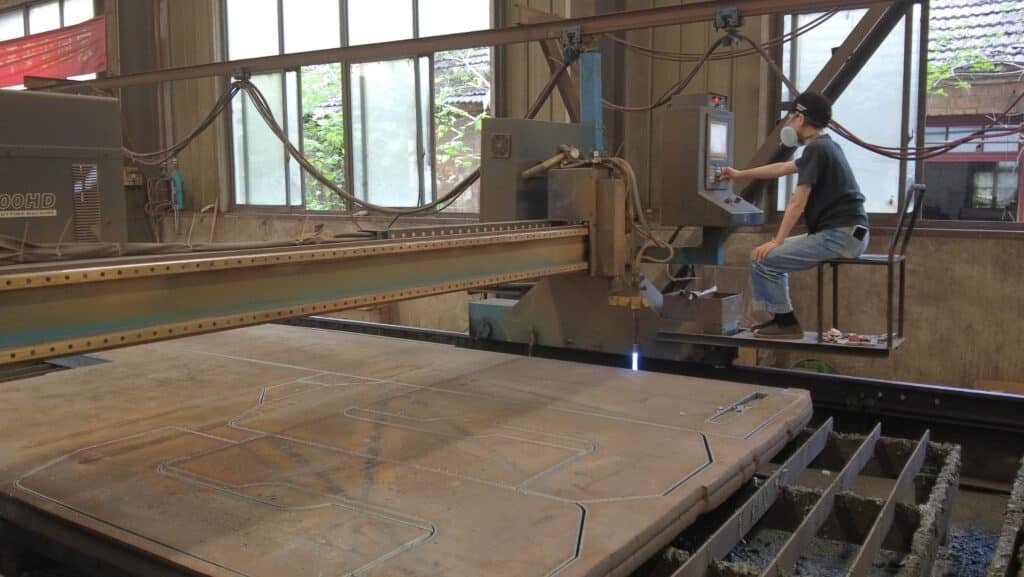
Steel plate cutting marks the first step in Press Brake Machine Manufacturing. Workers select high-quality steel plates and cut them into precise shapes and sizes. This process uses advanced CNC machines to ensure accuracy. Tight tolerances are essential for critical alignments in the final machine. Operator skill plays a key role, especially when handling irregular shapes. The choice of cutting technique—such as Air Bending, Bottoming, or Coining—affects the final precision. Coining provides the tightest tolerances, making it ideal for demanding applications.
| Aspect | Details |
|---|---|
| Tolerances | CNC-controlled press brakes hold tight tolerances, essential for critical alignments. |
| Operator Skill | Skilled operators achieve high accuracy, especially for complex shapes. |
| Techniques | Air Bending, Bottoming, and Coining; Coining offers the highest precision. |
Accurate steel plate cutting lays a strong foundation for the entire Press Brake Machine Manufacturing process.
Borax Treatment
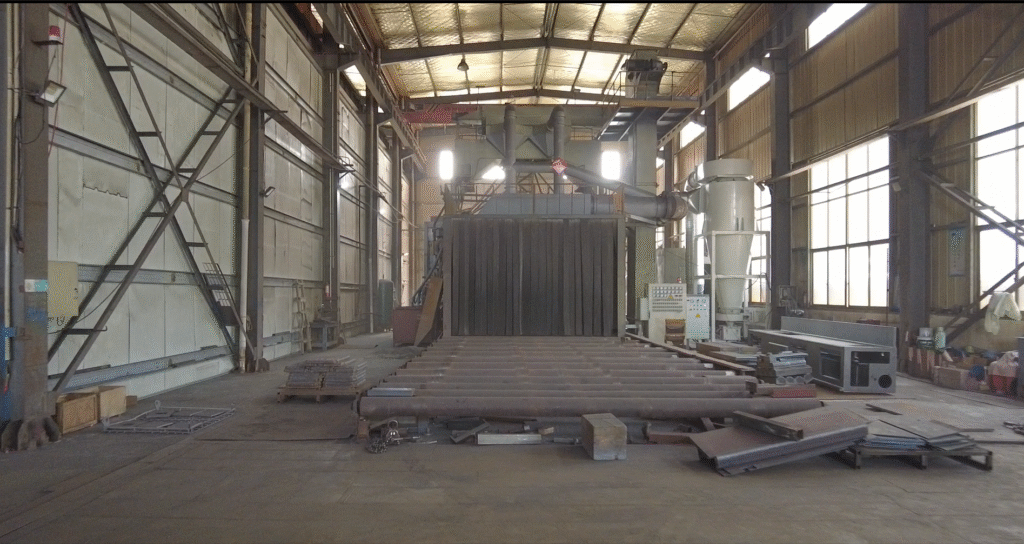
After cutting, the steel plates undergo borax treatment. Workers apply a borax solution to the metal surfaces. This step removes impurities and prevents oxidation during welding. Clean surfaces help create strong, reliable welds. Borax treatment also reduces the risk of defects in later stages. By preparing the steel properly, manufacturers ensure better performance and longer machine life.
Welding
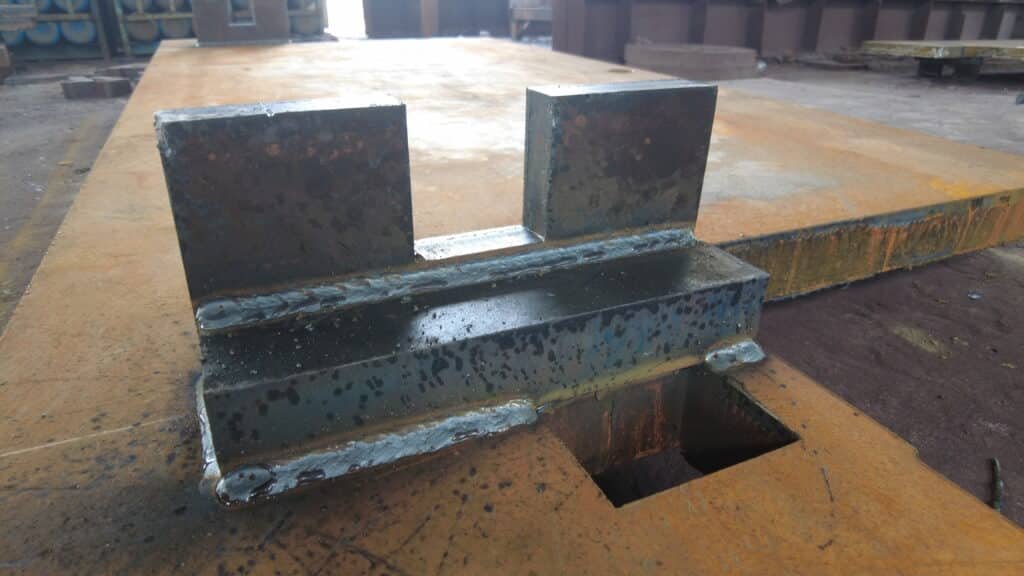
Welding joins the cut and treated steel plates into the main frame and other structural parts. Skilled welders use precise techniques to create strong, uniform joints. Proper welding ensures the frame can handle high pressure and repeated use. Any weakness in the welds could affect the safety and durability of the machine. In Press Brake Machine Manufacturing, welding quality directly impacts the machine’s reliability.
Machining
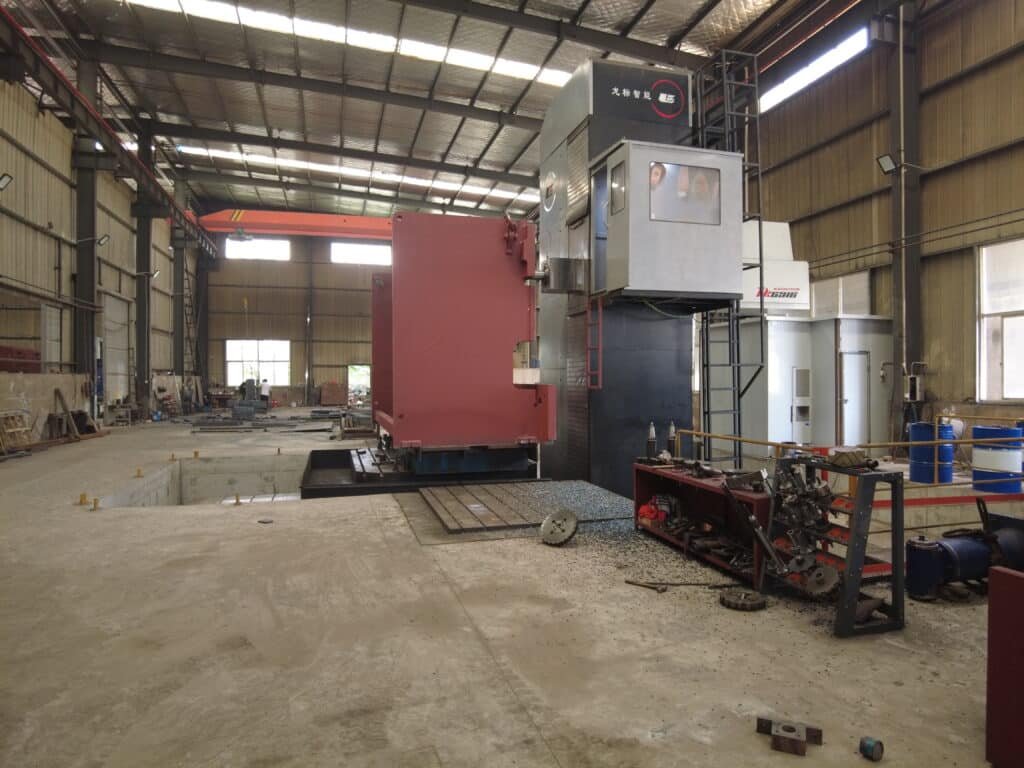
Machining shapes and finishes the welded components. Workers use lathes, milling machines, and grinders to achieve exact dimensions. Precision machining is critical for moving parts and alignment. Several advanced systems help maintain accuracy:
| Component | Function |
|---|---|
| Servo Motors | Convert rotary motion into linear motion, ensuring high transmission efficiency and precision. |
| Linear Encoders | Provide continuous feedback on position, maintaining accuracy within ±0.02 mm. |
| Crowning Systems | Ensure straight bending, compensating for physical deformation during the process. |
| Automatic Deflection Comp. | Reduces angular deviation, improving first-pass success rates and minimizing material waste. |
To achieve optimal performance, manufacturers follow strict guidelines:
- Invest in a press brake with sufficient tonnage for the materials used.
- Maintain consistent ambient temperature to prevent thermal expansion.
- Implement regular calibration schedules for all measurement systems.
- Use certified materials with precise thickness tolerances.
- Train operators in precision techniques.
Machining ensures that every part fits perfectly, supporting the high standards of Press Brake Machine Manufacturing.
Painting
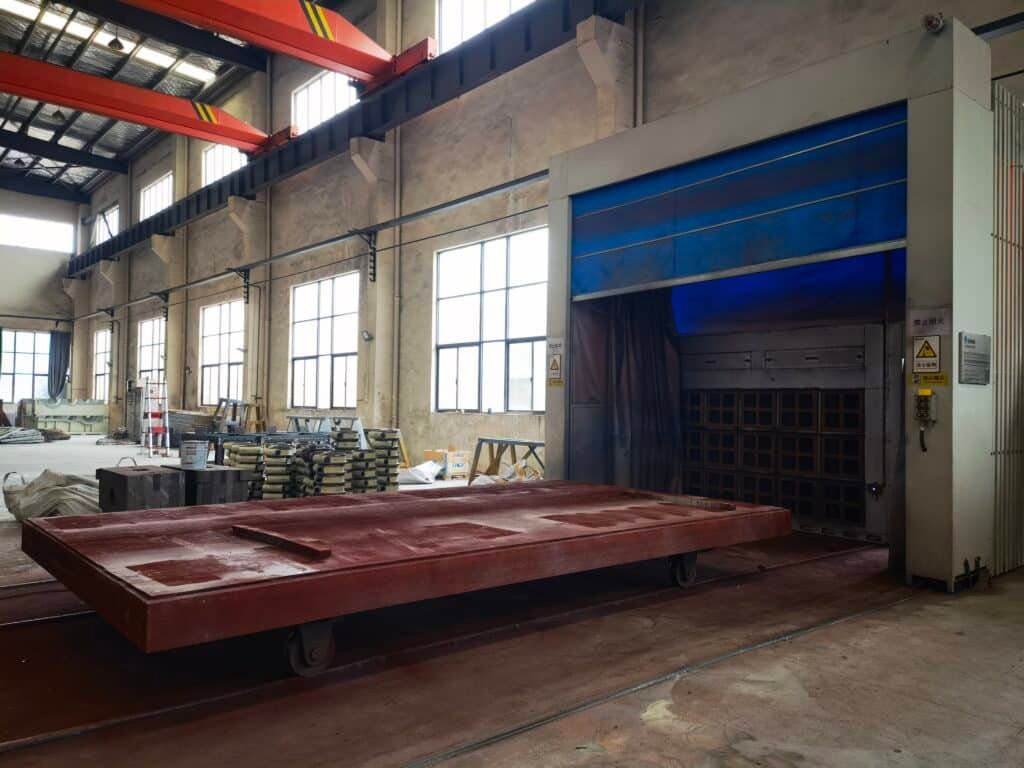
Painting protects the machine from rust, chemicals, and environmental damage. Workers apply several layers of specialized coatings. The process often starts with a zinc-rich primer for cathodic protection. An intermediate layer adds mechanical strength, while the topcoat resists UV damage and other environmental factors. Moisture-cured polyurethanes, such as Durabak, dry quickly and provide waterproof protection. These coatings remain flexible, so they do not crack when the machine moves.
| Property | Description |
|---|---|
| Exceptional adhesion | Maintains protection despite constant movement. |
| Impact resistance | Prevents chipping and flaking. |
| Chemical resistance | Withstands exposure to oils and fluids. |
| UV stability | Prevents degradation from sun exposure. |
| Flexibility | Moves with the metal without cracking. |
| Self-healing properties | Maintains protection even after minor damage. |
Proper painting extends the life of the machine and keeps it looking new.
Assembly
Assembly brings together all the machined and painted parts. Workers fit the frame, hydraulic system, control unit, and other components with great care. Assembly accuracy determines how closely the final product matches design specifications. High accuracy reduces scrap rates and ensures that all parts fit together reliably. This step is essential for efficient manufacturing and long-term performance. Skilled operators, proper machine setup, and accurate programming all contribute to successful assembly.
Debugging
Debugging serves as the final step before the machine leaves the factory. Technicians check every component and test the machine’s performance. They inspect the hydraulic system, electrical connections, and control panel for correct installation. If they find any issues, they report them immediately for correction. Documentation and maintenance plans are prepared for the customer
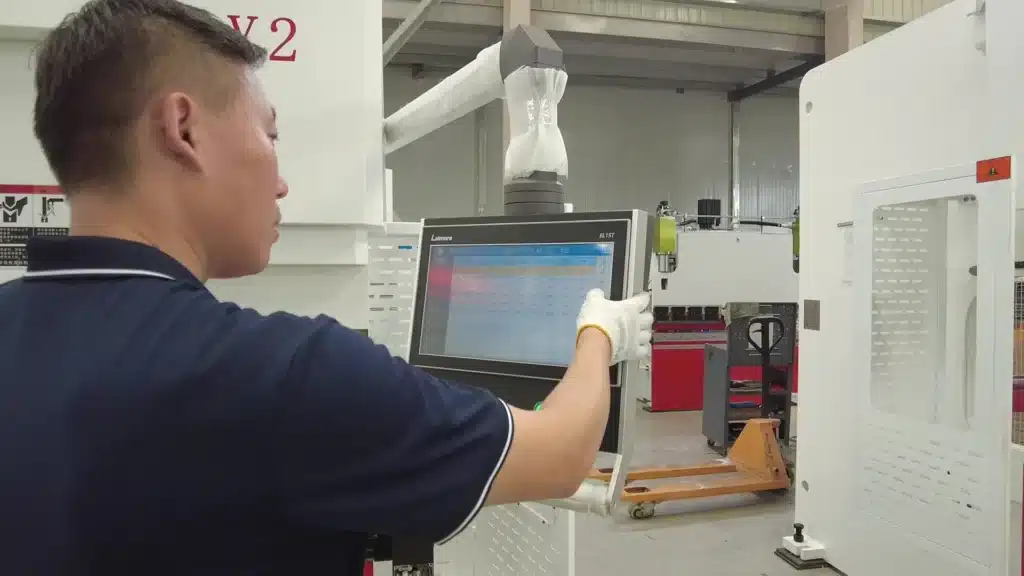
Common issues identified during debugging include:
| Common Issue | Possible Causes |
|---|---|
| No pressure in the hydraulic system | Solenoid coil issues, stuck cartridge valve, motor phase adjustment, damaged oil pump, blocked pressure control valve, etc. |
| Long pause time at speed change | Air in upper cavity, small flow rate, incomplete filling valve closure, low oil level, etc. |
| Ram not coming down in manual mode | Reversing valve issues, stuck filling valve |
A thorough debugging process ensures that each Press Brake Machine Manufacturing product meets strict quality standards and performs reliably in the field.
Testing & Quality
Calibration
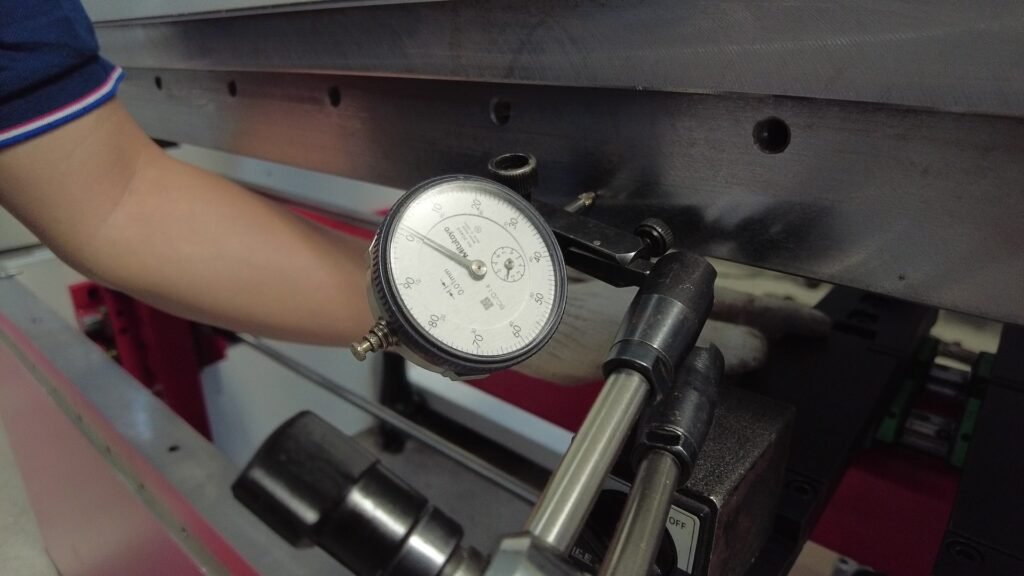
Calibration ensures that hydraulic CNC press brakes deliver precise results in every operation. Technicians use several methods to verify accuracy. They check die holders for positioning and repeatability. The backgauge system undergoes calibration to match the CNC’s displayed coordinates with actual distances. Crowning compensation systems receive a three-section test to confirm consistent bend angles. Bend parameter calibration establishes a link between programmed angles and pressing depth. The table below summarizes these methods:
| Calibration Method | Description |
|---|---|
| Checking Die Holders | Verify positioning accuracy and repeatability of quick-clamp holders by measuring changes in critical surfaces. |
| Backgauge System Calibration | Ensure the CNC’s X-coordinate matches the physical distance from the gauge finger to the lower V-die center. |
| Crowning Compensation System Calibration | Perform a three-section test for consistent bend angles across the workpiece. |
| Bend Parameter Calibration | Use digital protractors and test dies to relate programmed angles to actual pressing depth. |
Technicians typically perform calibration once a year. For facilities that demand high productivity and accuracy, more frequent calibration may be necessary.
Performance Testing
Performance testing evaluates how well the press brake meets operational standards. Technicians measure hydraulic system efficiency by monitoring pressure transducers and valve response times. They use digital angle finders to check bend angles against tolerances. Dial indicators verify parallelism and tool alignment. Sequential tests assess process consistency, including angle reproducibility and material springback. Cycle time measurements help optimize efficiency. The control system’s responsiveness and command execution latency also undergo assessment. The table below outlines key metrics:
| Metric Type | Evaluation Method |
|---|---|
| Hydraulic System Evaluation | Monitor pressure transducers for pump efficiency and valve response times. |
| Bend Angle Measurement | Use digital angle finders to measure angles and document variations. |
| Parallelism Verification | Mount dial indicators to check tool alignment and tolerances. |
| Process Consistency Analysis | Execute sequential tests for angle reproducibility and material springback. |
| Cycle Time Optimization | Measure complete bending cycle times for efficiency. |
| Control System Functionality | Assess CNC interface responsiveness and command execution latency. |
These tests confirm that each machine produced through Press Brake Machine Manufacturing meets strict quality requirements.
Final Inspection
Final inspection plays a vital role in ensuring reliability and safety. Technicians conduct regular inspections to maintain precision and safe operation. Early identification of issues guarantees that the CNC press brake operates efficiently. They always refer to the machine’s manual for specific procedures. Routine maintenance supports longevity and reliability. Preventive care reduces costly breakdowns and production delays. Technicians keep detailed logs of inspections and repairs to ensure accountability and trace recurring problems.
Tip: Consistent inspection and maintenance help extend the life of hydraulic CNC press brakes and improve workplace safety. 🛠️
Shipping
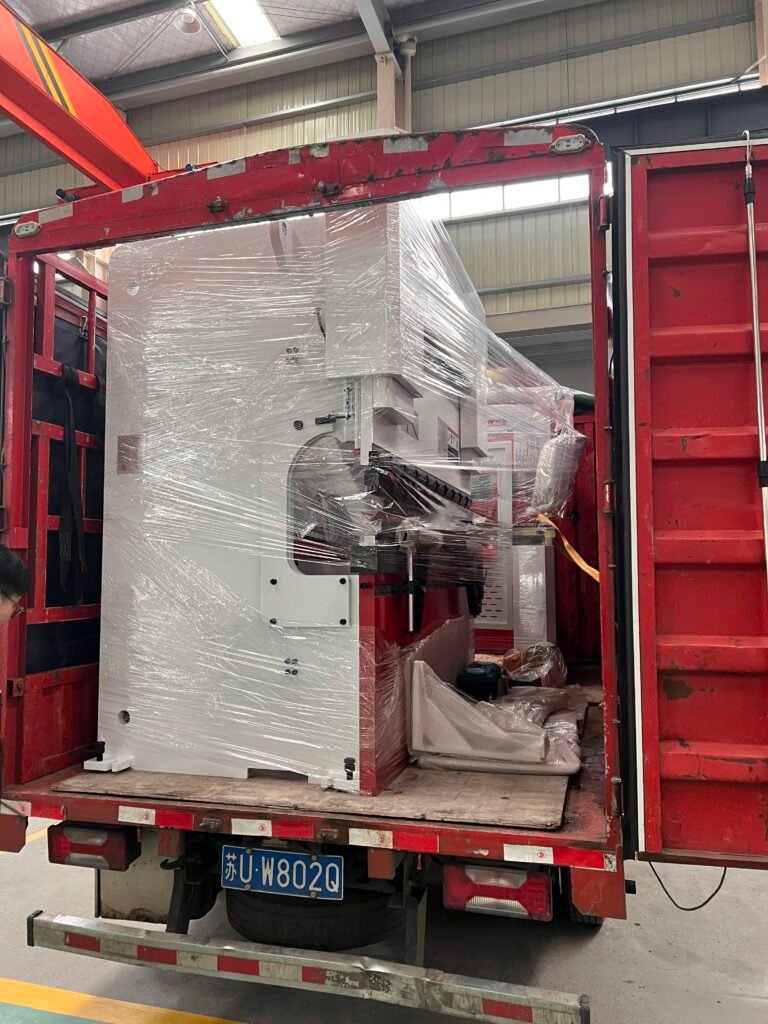
After passing inspection, our press brake machines are fully wrapped with protective plastic film and prepared for shipment.
FAQ – Press Brake Manufacturing
Q1: Is full in-house production common among press brake machine manufacturers?
No. Many manufacturers outsource frames or key structures. Full-process in-house production is relatively rare.
Q2: Does in-house production increase machine cost?
Not necessarily. It mainly improves consistency and reduces long-term risk, not just initial cost.
Q3: Is this manufacturing model important for long machines (3 m / 4 m / 6 m)?
Yes. Structural accuracy control becomes increasingly critical as machine length increases.
Q4: Does this affect delivery time?
Yes. In-house production allows more predictable lead times and better control for project orders.
Q5: Are spare parts easier to replace in the future?
Yes. Standardized internal structures make maintenance and component replacement more straightforward.
Q6: Can the same model be delivered with consistent quality over multiple orders?
Yes. Unified production and inspection processes ensure batch consistency.
Q7: Does this support OEM or private-label cooperation?
Yes. Structural control makes OEM customization more stable and repeatable.
Q8: Is this relevant if I only need a standard hydraulic press brake?
Yes. Even standard models benefit from better structural accuracy and long-term stability.
Q9: Is this production model suitable for high-tonnage press brakes?
Yes. It is especially important for machines above 160T, where frame behavior directly affects accuracy.
Q10: Can this reduce after-sales adjustment and service risk?
Yes. Machines arrive more stable, reducing on-site corrections and troubleshooting.