5 Most Common Hydraulic Press Brake Issues: The Ultimate Maintenance Checklist to Prevent Downtime
Table of Content
This post is also available in:
Español (Spanish) العربية (Arabic) Русский (Russian)
Introduction: Mastering the performance of your hydraulic press brake is essential for achieving high-precision metal bending and maintaining workshop efficiency. However, even the most robust machines can encounter unexpected technical failures. Whether it’s inconsistent angles or hydraulic overheating, understanding how to diagnose these problems early can save your business thousands in repair costs. In this expert guide, we provide a comprehensive hydraulic press brake maintenance checklist and troubleshooting steps to ensure your equipment runs at peak performance 24/7.
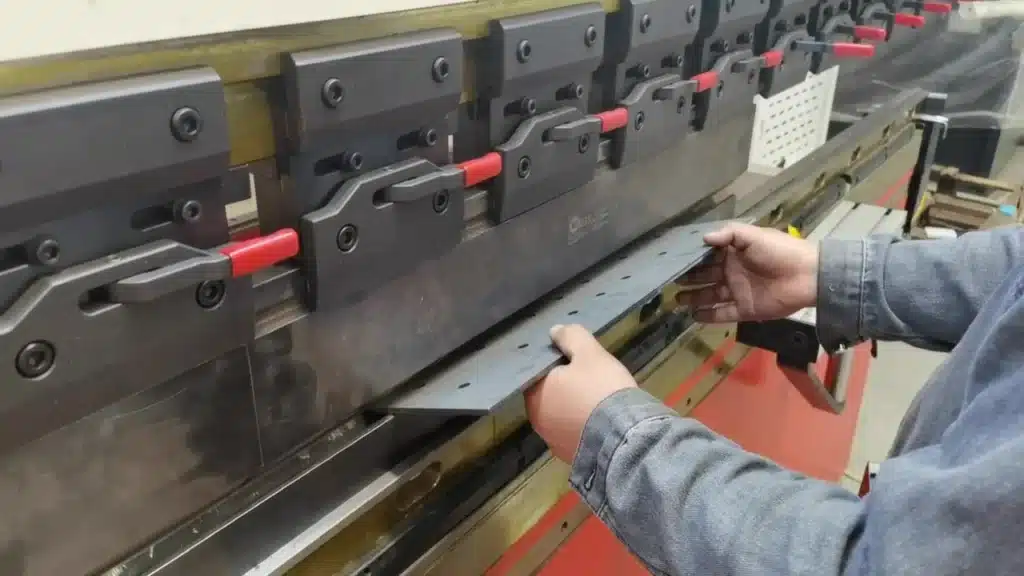
Maintaining a hydraulic press brake is critical for precision metal fabrication. When these machines fail, it results in expensive downtime and wasted material. Below are the most searched-for issues, analyzed with professional insights.
1. Inconsistent Bending Angles (Precision Failures)
The most frequent search query from operators is why their hydraulic press brake produces different angles across the same workpiece.
-
Cause Analysis: This is often caused by bed deflection (the “canoe effect”) where the machine frame flexes under high tonnage. Alternatively, worn-out press brake tooling or miscalibrated linear encoders can cause the left and right cylinders to become unsynchronized.
-
Solution Strategy: Regularly calibrate your crowning system (mechanical or hydraulic) to compensate for deflection. Additionally, inspect your tooling for wear and ensure the proportional valves are functioning correctly to maintain cylinder synchronization.
2. Overheating of the Hydraulic System
If your machine slows down after a few hours of work, it’s likely due to oil overheating—a critical issue that leads to seal degradation.
-
Cause Analysis: High ambient shop temperatures, internal oil bypass in the manifold, or a clogged cooling radiator are the primary culprits. When the oil exceeds 55°C (131°F), its viscosity drops, reducing efficiency.
-
Solution Strategy: Clean your air coolers weekly using compressed air. Ensure the oil reservoir is filled to the correct level, as a higher volume of oil helps dissipate heat more effectively.
3. Excessive Noise and Mechanical Vibration
A noisy hydraulic press brake is more than just an annoyance; it’s a warning sign of internal damage.
-
Cause Analysis: High-pitched squealing often indicates pump cavitation caused by a dirty suction filter. Banging noises usually point to air trapped in the hydraulic circuit or loose foundation bolts.
-
Solution Strategy: Implement a strict schedule to replace hydraulic filters every 2,000 hours. If noise persists, follow a bleeding procedure by cycling the ram without load to evacuate trapped air.
4. The Ram Fails to Return or Moves Slowly
When the ram stays at the bottom of a stroke, it creates an immediate production bottleneck.
-
Cause Analysis: This is typically a signal failure or a valve issue. Faulty solenoid coils or debris stuck in the return valve prevent the oil from flowing back. In some cases, misaligned backgauge sensors trigger a safety stop.
-
Solution Strategy: Check the LED indicators on your PLC or solenoid valves to identify electrical faults. Ensure all safety light curtains and limit switches are clear of obstructions.
5. Oil Leaks at the Cylinder or Manifolds
Leaks are the most visible sign of a neglected maintenance checklist.
-
Cause Analysis: Long-term vibration loosens hydraulic fittings, while contaminated oil acts like sandpaper, destroying the V-packing and U-cup seals inside the cylinders.
-
Solution Strategy: Replace cylinder seal kits proactively rather than reactively. Always use high-quality hydraulic oil with the correct viscosity to protect internal components from friction.
Press Brake Machine Troubleshooting: Common Causes of Oil Leakage and How to Fix Them
Daily Maintenance Checklist: Hydraulic Press Brake
| Category | Item | Inspection Task | Status (OK/Fail) |
| 1. Pre-Start | Oil Level | Check hydraulic oil level; ensure it is above 1/2 of the sight glass. | |
| Lubrication | Inspect guide rails and grease points for adequate lubrication. | ||
| Tooling | Ensure punch and die are secure, free of cracks, and clear of debris. | ||
| 2. Operational | Oil Temp | Monitor after 1 hour; normal range is 30°C – 55°C (86°F – 131°F). | |
| Noise/Vibration | Listen for high-pitched squealing (pump) or banging (valves). | ||
| Pressure | Confirm pressure gauge readings are stable during bending cycles. | ||
| 3. Post-Stop | Cleaning | Wipe down the ram, worktable, and piston rods to remove dust/chips. | |
| Reset | Lower the ram to the bottom position and turn off the main power. | ||
| Environment | Ensure the surrounding area is dry and free of oil spills. |
Conclusion: Master Your Production Efficiency
Preventing hydraulic press brake issues starts with a proactive mindset. By addressing these 5 common failures early and sticking to a rigorous maintenance checklist, you can reduce repair costs by up to 40% and significantly extend the life of your machine.