Servo Electric Press Brakes 30–80T
What Is a Servo Electric Press Brake?
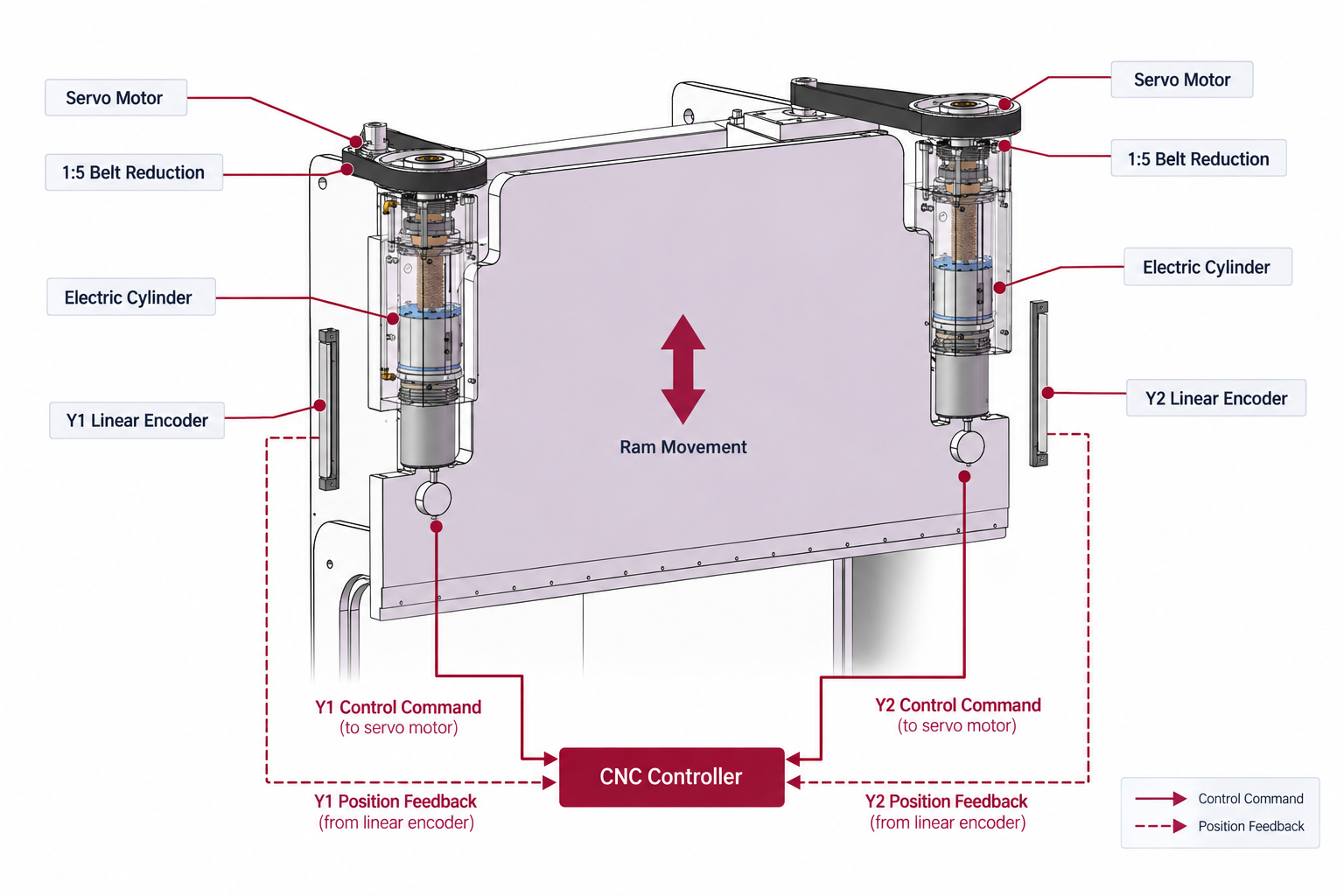
A servo electric press brake uses high-performance servo motors and electric cylinders to control ram movement without a conventional hydraulic drive system. Dual servo drives work with Y1/Y2 linear encoder feedback to provide precise, synchronized ram positioning for accurate and repeatable bending.
High Bending Accuracy
Lower Energy Consumption
Clean & Low Maintenance
Fast & Quiet Operation
Electric vs Hydraulic Press Brake: Which One Should You Choose?
Choose an Electric Press Brake When You Need
- High precision and repeatability
- Clean operation without hydraulic oil
- Lower energy consumption
- Low maintenance and less downtime
- Faster setup for efficient sheet metal production
 DISCUSS YOUR REQUIREMENTS
Consider a Hydraulic Press Brake When You Need
- Higher tonnage above 80 tons
- Thick or heavy plate bending
- Large-format workpieces
- Special or complex bending applications
- A more cost-effective solution for general heavy-duty fabrication
Looking for a Larger Press Brake?
Not Sure Which Press Brake Fits Your Needs?
Free Online Tonnage Calculator
Electric Press Brake Models
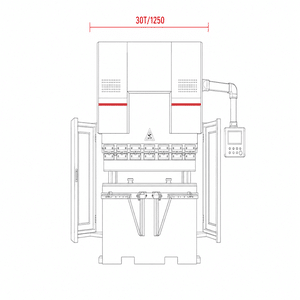
30t/1250 mm
 Get a Quote
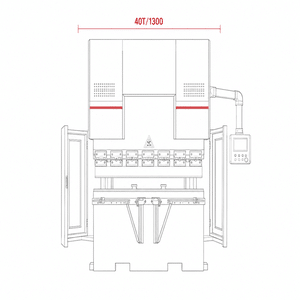
40t/1300 mm
 Get a Quote
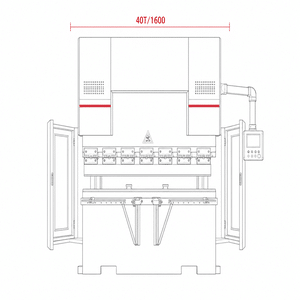
40t/1600 mm
 Get a Quote
60t/1600 mm
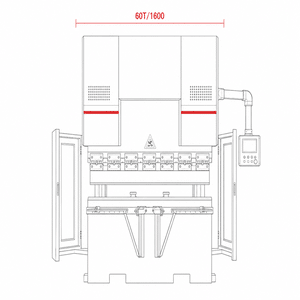 Get a Quote
60t/2050 mm
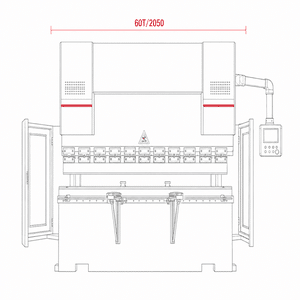 Get a Quote
80t/2050 mm
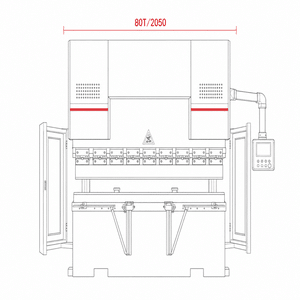 Get a Quote
80t/2550 mm
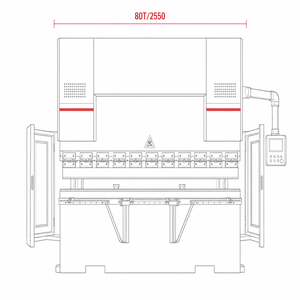 Get a Quote
Servo Electric Press Brake Specifications
| Parameter | 30t/1250 mm | 40t/1300 mm | 40t/1600 mm | 60t/2050 mm | 80t/2550 mm |
|---|---|---|---|---|---|
| Nominal Force(T) | 30 | 40 | 40 | 60 | 80 |
| Worktable Length | 1250 | 1300 | 1600 | 2000 | 2500 |
| Column Distance | 1070 | 1265 | 1265 | 1600 | 2000 |
| Throat Depth | 300 | 300 | 300 | 350 | 350 |
| Ram Stroke(mm) | 140 | 140 | 140 | 140 | 150 |
| Opening Height | 430 | 440 | 440 | 440 | 450 |
| Backgauge travel (mm) | 500 | 500 | 500 | 500 | 500 |
| Down Speed (mm/s) | 200 | 200 | 200 | 160 | 186.9 |
| Pressing (mm/s) | 50 | 50 | 50 | 50 | 50 |
| Return Speed (mm/s) | 200 | 200 | 200 | 160 | 160 |
| Main Motor Power (KW) | 2 ×5.5 | 2 ×7.5 | 2 ×7.5 | 2 ×16.5 | 2 ×26 |
| Overall Dimensions (L × W × H) (mm) | 2000 × 1600 × 2200 | 2000 ×1500 ×2300 | 2300 ×1500 ×2300 | 2800 ×1700 ×2300 | 3200 ×1800 ×2300 |
| Weight(T) | 3.0 | 3.2 | 3.6 | 5.4 | 6.7 |
Standard Configuration of MECA Electric Press Brake
Standard Configuration List
| Item | Description |
|---|---|
| Axis | 4 |
| 6 | |
| CNC System | Laimore (with English language) |
| Servo Main Motor | Chinese brand |
| Magnetic Scale | Italy GIVI |
| Ball Screw | Chinese brand |
| Servo Motor (back gauge) | Chinese brand |
| AC Contactor | Schneider |
| Foot Pedal | Double foot pedal |
| Clamp | Standard manule clamp |
| Toolings | 80°/82°/85° Punch |
| 2V (v8 v12)Die |
Key Components Explained
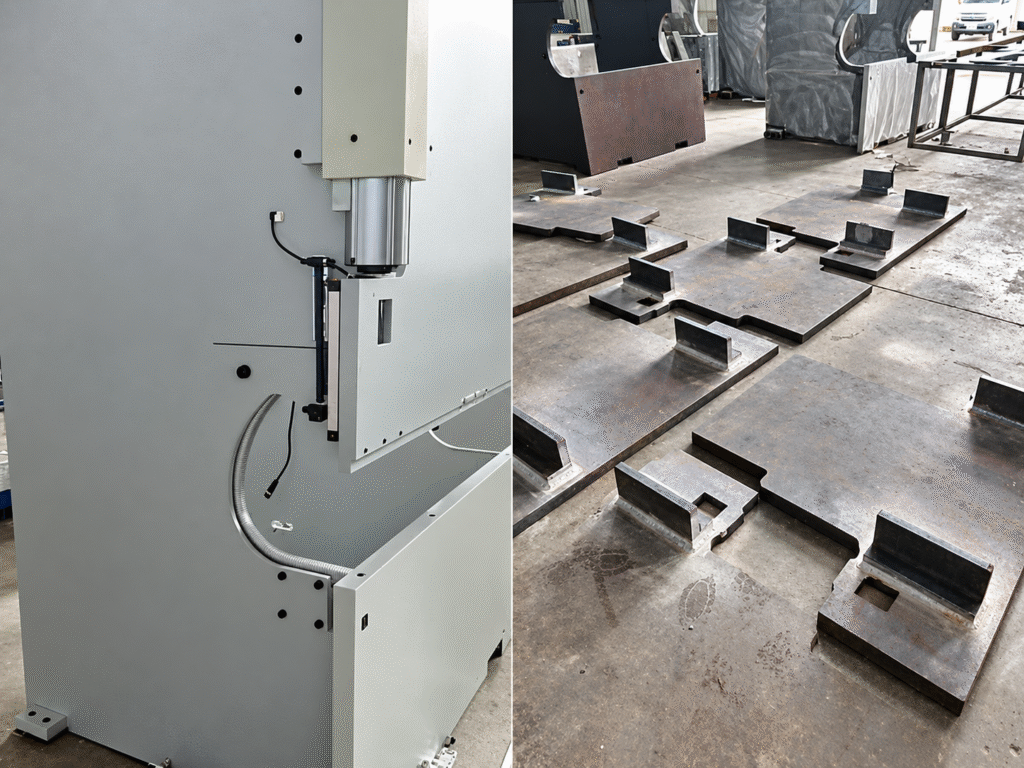
Frame
High-rigidity integrated steel frame is processed by stress relief annealing and precision machining to ensure excellent structural stability and long-term accuracy.
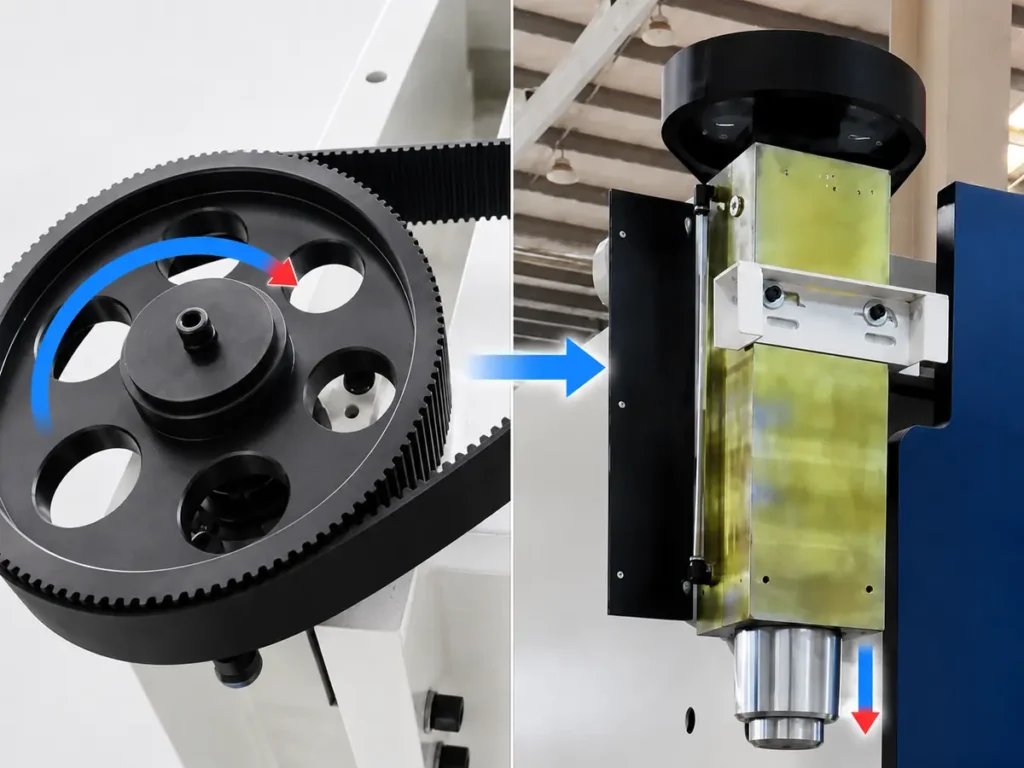
Electric Cylinder
Servo-driven electric cylinders provide precise ram positioning, adjustable speed and accurate force control without hydraulic oil, delivering clean and efficient bending performance.
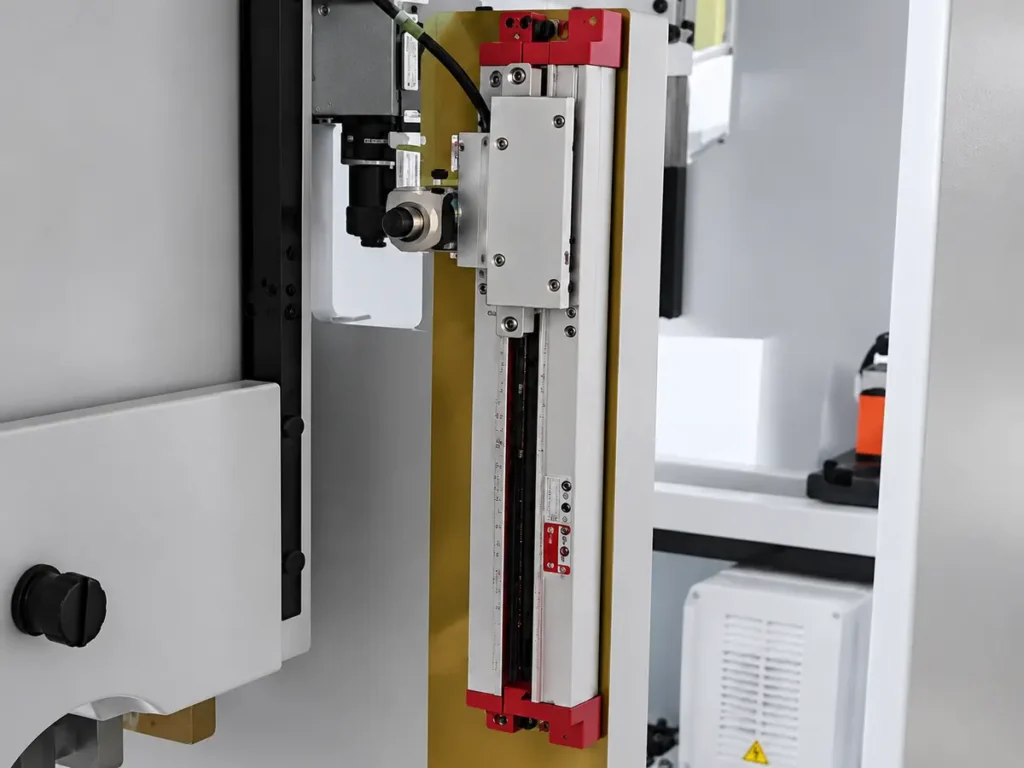
Linear Encoder
GIVI linear encoder provide real-time Y1/Y2 position feedback for closed-loop CNC control, offering high accuracy, fast response, and reliable performance for better synchronization and repeatability.
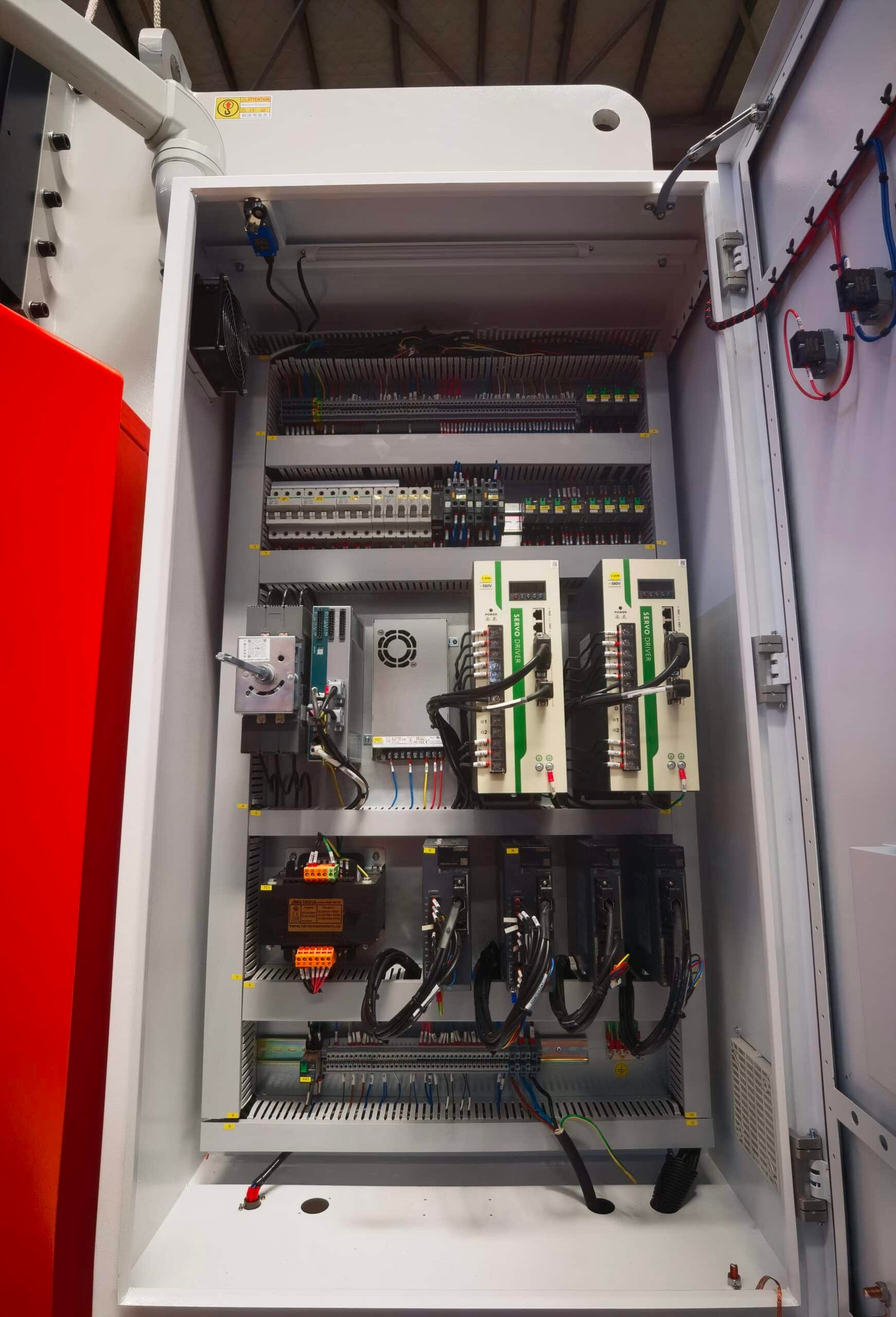
The main electrical components use Schneider Electric products, and the overall wiring layout is neat and well organized. CE electrical control upgrades can be customized according to customer requirements.
Front Support
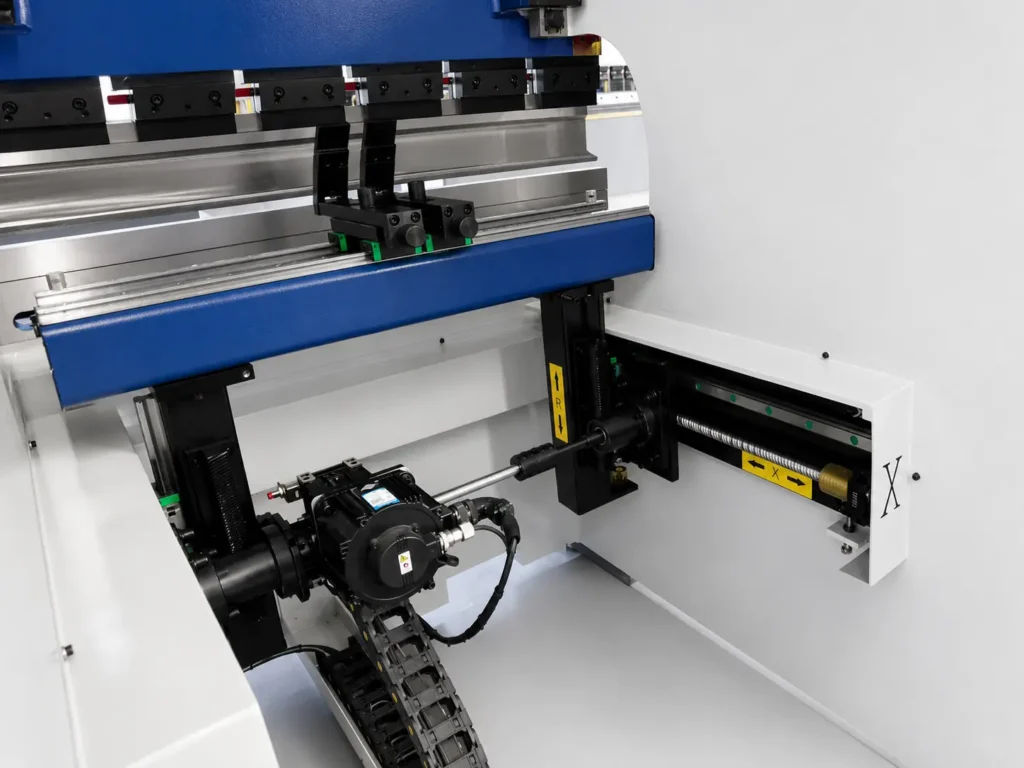
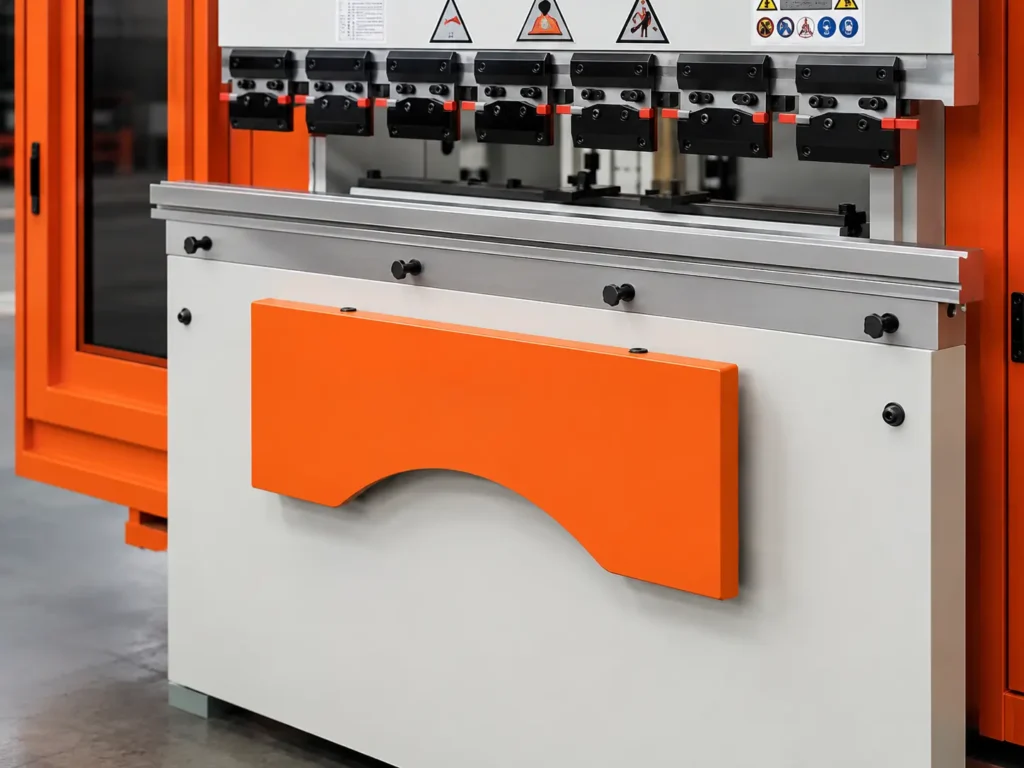
Lightweight front support arms can slide along the direction parallel to the worktable, providing support for sheet metal at different positions. The height can be adjusted up and down, and the arms can also be rotated and folded to reduce space occupation during non-operation or transportation.
CNC System
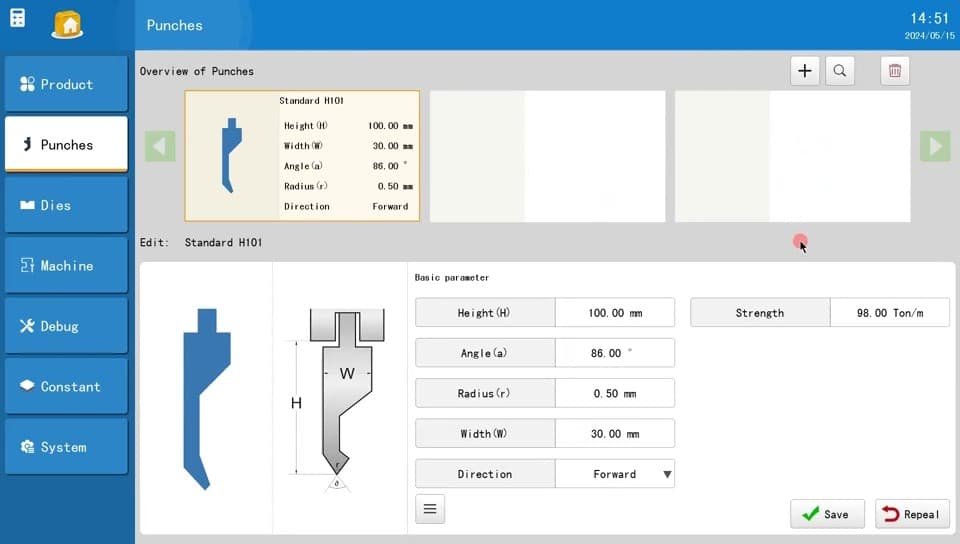
Laimore CNC control system, a Chinese brand with English language support. Free operation training videos are provided
Optional:
- DA 53TX
- Cybtouch CT 12
- ESA 840
Quick Clamp
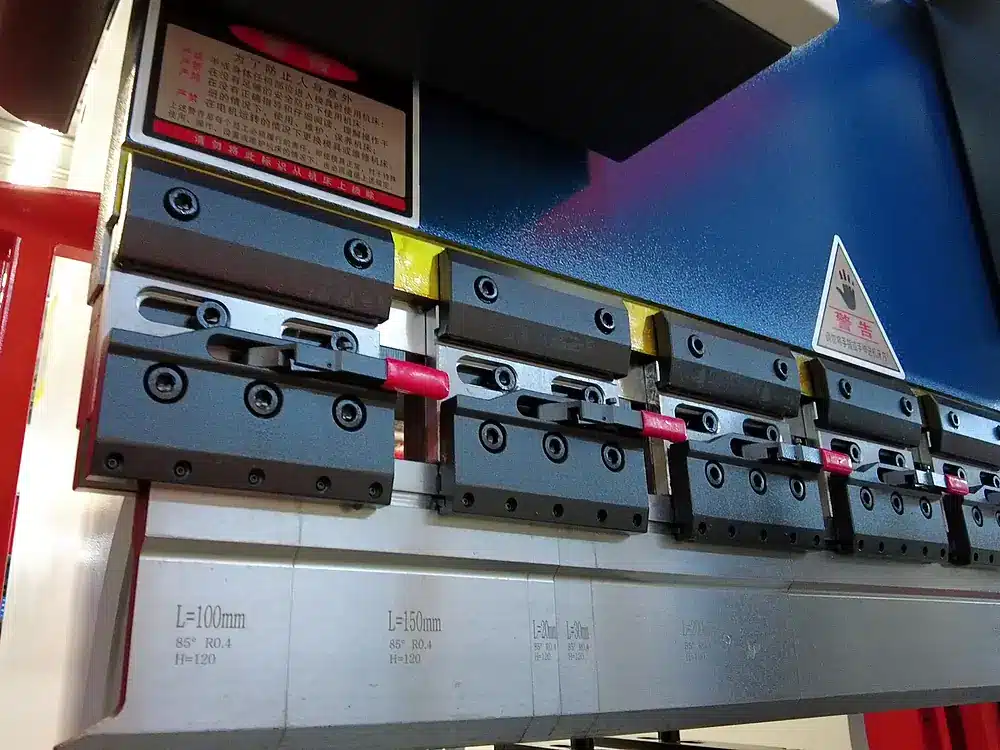
Standard configuration equipped with manual quick clamps.
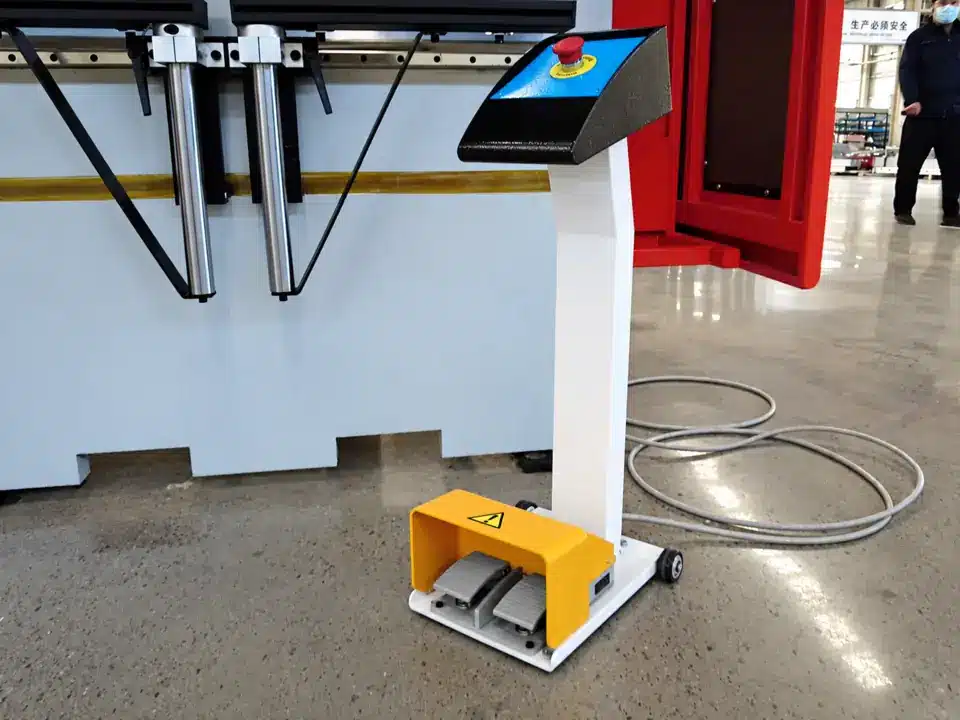
Dual Foot Pedal Switch
The left pedal controls the ram upward movement, and the right pedal controls the ram downward movement. The panel is equipped with an emergency stop button.
Optional Configuration
See the Electric Press Brake in Action
Real Electric Press Brake Selection Cases

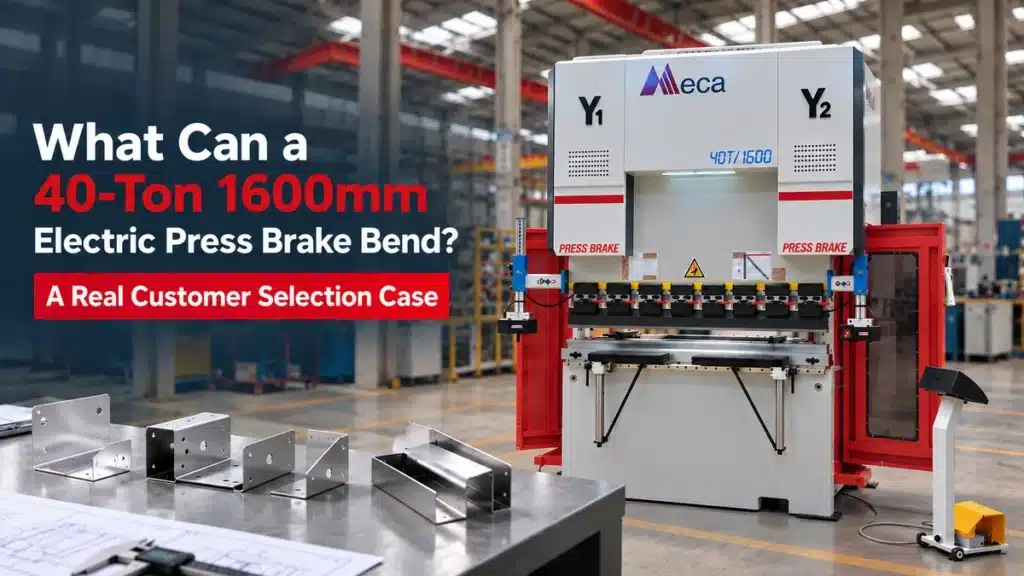
What Can a 40-Ton 1600mm Electric Press Brake Bend?
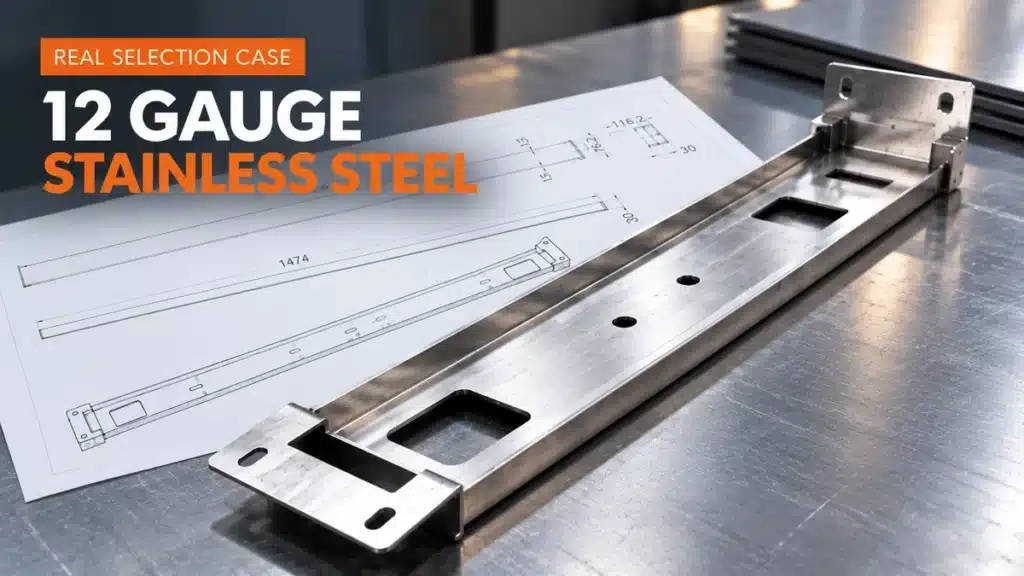
See how we analyzed aluminum, mild steel and stainless steel parts to select a 40T/1600mm electric press brake, define its practical bending range and customize a V12/V24/V32/V48 4V die.Why We Recommended a 40 Ton Electric Press Brake for 12 Gauge Stainless Steel
See how accurate material thickness and workpiece information led us to recommend a 40T/1600mm electric press brake for bending 12 Gauge stainless steel.Why This Customer Upgraded from a 30T to a 40T Electric Press Brake
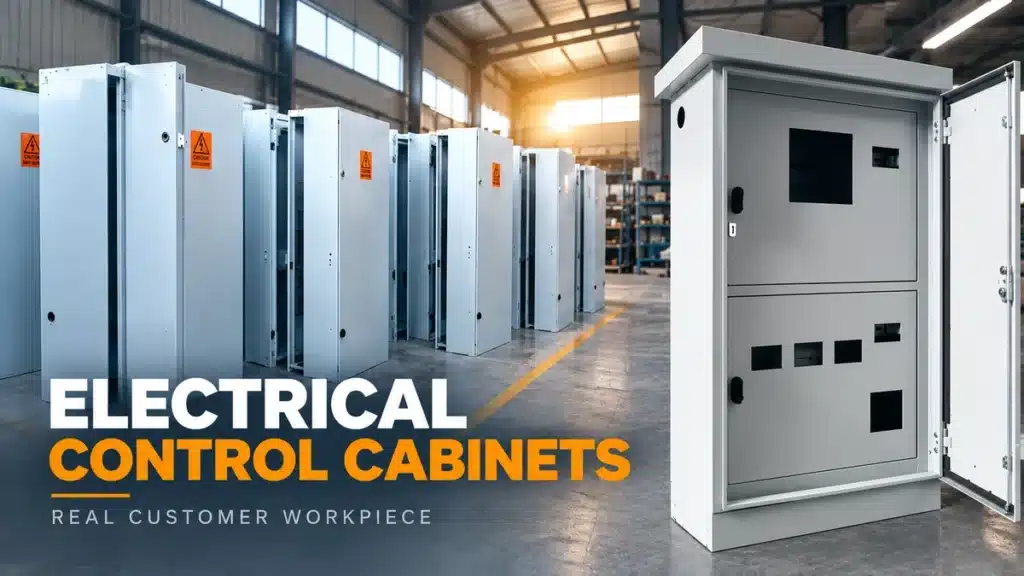
See why a customer upgraded from a 30T press brake to a 40T/1600mm electric press brake for greater capacity, faster tool changes and improved safety.
FAQ
How much more expensive is an all-electric press brake than a hydraulic one, and what is the payback period (ROI)?
All-electric press brakes typically cost 30%–60% more upfront than electro-hydraulic models. However, they reduce power consumption by 60%–70% (zero power draw while idling) and eliminate hydraulic oil and filter replacement costs. For shops running two shifts (12+ hours/day), electricity and maintenance savings usually offset the purchase price premium within 1.5 to 2 years.
What is the maximum sheet thickness an electric press brake can bend? Can it handle 6 mm stainless steel?
Electric press brakes excel in processing sheet metal under 3 mm (1/8″) thickness (typically in the 35T–120T capacity range). While larger electric machines can bend 6 mm plate, continuous heavy-duty bending shortens lead screw lifespan. For thick plate or high-strength steel (4 mm–6 mm+), a hybrid servo-hydraulic press brake is the recommended choice.
What is the difference between an all-electric and a hybrid press brake, and which should I choose?
All-electric press brakes eliminate hydraulics entirely, using servo motors with ball screws or belt drives for maximum speed, zero oil contamination, and high precision on thin sheets. Hybrid press brakes combine servo-driven hydraulic pumps with cylinders, delivering the heavy-tonnage impact resistance of hydraulics with the energy savings of servo technology—ideal for medium-to-thick plate applications.
How fast is an all-electric press brake, and how much does it increase output compared to hydraulic models?
Fast-approach and return speeds on electric press brakes reach 150–200 mm/s with significantly higher acceleration. Because there is no hydraulic pressure buildup or valve switching delay, overall cycle times for small, multi-bend sheet metal parts can be 50%–100% faster than traditional hydraulic press brakes.
How accurate are electric press brakes when bending long parts (e.g., 8 ft or 10 ft), and how is angle consistency maintained?
They are highly accurate. Electric press brakes come equipped with dynamic mechanical crowning systems (V-axis). The CNC controller calculates beam deflection based on material thickness, tensile strength, and bending force, adjusting the bed in real-time to eliminate “canoeing” (over-bending at the ends and under-bending in the middle).
With such high approach speeds, how do electric press brakes ensure operator safety?
With fast-down speeds reaching 150–200 mm/s, optical protection is critical. These machines rely on optical laser guarding systems (e.g., Lazer Safe, DSP) mounted directly to the upper beam. The laser safety field travels millimeters below the punch tip; if an operator’s hand or an obstruction breaks the beam, the system initiates an emergency stop and reversal in milliseconds without compromising production speed.
Is an electric press brake suitable for my production?
Electric press brakes are particularly suitable for precision sheet metal fabrication, electrical cabinets, enclosures, metal furniture, HVAC components, and other applications involving frequent bending of small to medium-sized parts. For very thick or heavy plates requiring high tonnage, a hydraulic press brake may be more suitable.
Why are all-electric press brakes required for cleanrooms, medical devices, and EV battery tray manufacturing?
Cleanroom and EV battery applications enforce strict zero-oil contamination policies. Hydraulic leaks or airborne oil mist adhere to aluminum battery casings, causing voids, pinholes, and spatter during subsequent laser welding. All-electric press brakes are 100% oil-free, compliant with ISO Class 6–8 cleanroom standards, and eliminate downstream degreasing/cleaning processes.
Can an electric press brake use my factory's existing tooling, and can it be integrated with a robot?
Yes. As long as the clamping system (e.g., European / Amada-style fast clamping), open height, and throat depth match your existing dies, old tooling can be reused. For automation, modern electric press brake CNC controls support open industrial protocols (Profinet, EtherCAT, OPC UA) for seamless integration with gantry systems or 6-axis robot bending cells.