Press Brake Tonnage Calculator
Accurately calculate the force required for metal sheet bending
m
mm
mm
Required Bending Force
0.00
tons
Enter parameters and calculate
Current Parameters:
Material:
Not selected
Length:
- m
Thickness:
- mm
Die Opening:
- mm
V-Die Opening Selection Guide
- v = 6S, S: 0.5-2.6mm
- v = 8S, S: 3.0-8.0mm
- v = 10S, S: 9.0-10.0mm
- v = 12S, S: above 12mm
This calculator estimates the force required for 90° air bending.
PRESS BRAKE TONNAGE CALCULATION GUIDE
How Is Press Brake Tonnage Calculated?
For mild steel air bending, the required force can be estimated using
P = 650 × S² × L / V, where
P is in tons,
S is sheet thickness in millimeters,
L is bending length in meters,
V is the die opening in millimeters.
Use the press brake tonnage calculator above for a quick estimate, or read our complete calculation guide to learn how the formula works, how to read a press brake tonnage chart, and how to calculate bending tonnage for different sheet metal materials.
Learn How to Calculate Tonnage →P = 650 × S² × L / V, where
P is in tons,
S is sheet thickness in millimeters,
L is bending length in meters,
V is the die opening in millimeters.
Use the press brake tonnage calculator above for a quick estimate, or read our complete calculation guide to learn how the formula works, how to read a press brake tonnage chart, and how to calculate bending tonnage for different sheet metal materials.
Inside the Guide
Press Brake Tonnage Formula
Step-by-step formula and variables explained.
How to Read a Press Brake Tonnage Chart
Understand bending force charts for different sheet thicknesses and V-die openings.
Sheet Metal Material Adjustment
See how carbon steel, stainless steel and aluminum affect the required bending tonnage.
V-Die Opening Selection
Choose the correct V-die opening for accurate tonnage calculation.
Press Brake Tonnage Calculation Examples
See real bending force examples for different materials, thicknesses and bending lengths.
How to Select a Press Brake After Calculating Tonnage
The calculated bending force represents the tonnage required for one specific workpiece and bending length. Use it as a starting point to identify the minimum machine capacity.
If you produce multiple workpieces or bend parts with different lengths, thicknesses or materials, calculate each case separately and select the machine based on the highest required tonnage and longest bending length.
View Press Brake ModelsIf one press brake will be used for several workpieces, calculate each workpiece separately. Select the machine according to the highest required tonnage and the longest bending length, rather than adding the tonnage values together.
Find the Right Press Brake for Your Required Tonnage
Choose the right press brake based not only on calculated tonnage, but also on your maximum bending length, workpiece range, production volume, accuracy requirements and preferred drive system.
Hydraulic Press Brake
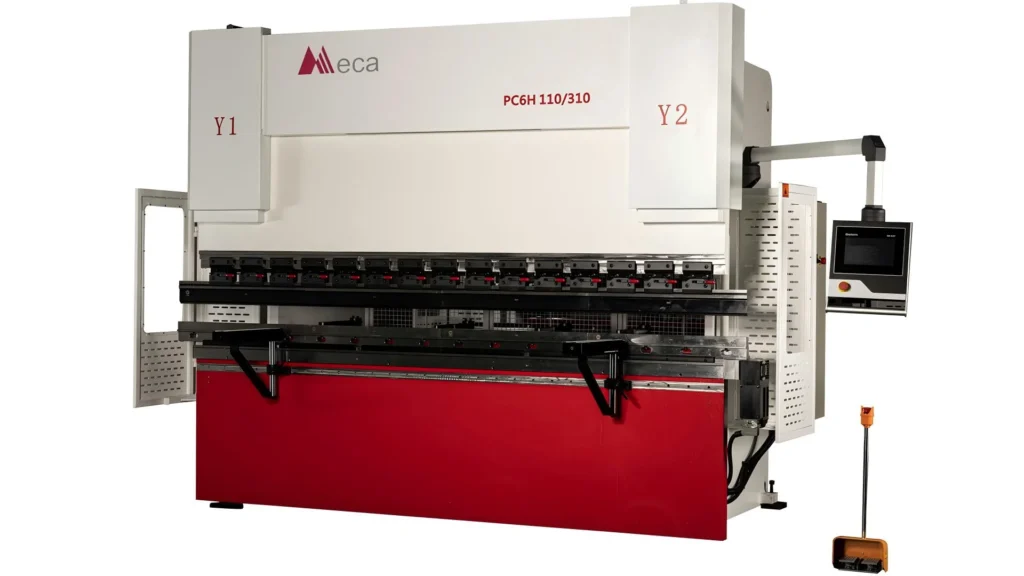
- 60 – 600 tons
- Wide thickness range
- Stable & powerful performance· Suitable for general fabrication
Servo-Electric Press Brake
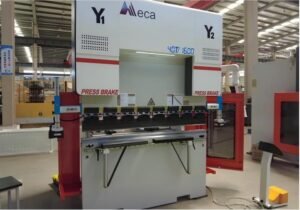
- 30 – 80 tons
- High precision & repeatability
- Lower energy consumption·
- Ideal for thin to medium sheet
Tandem Press Brake
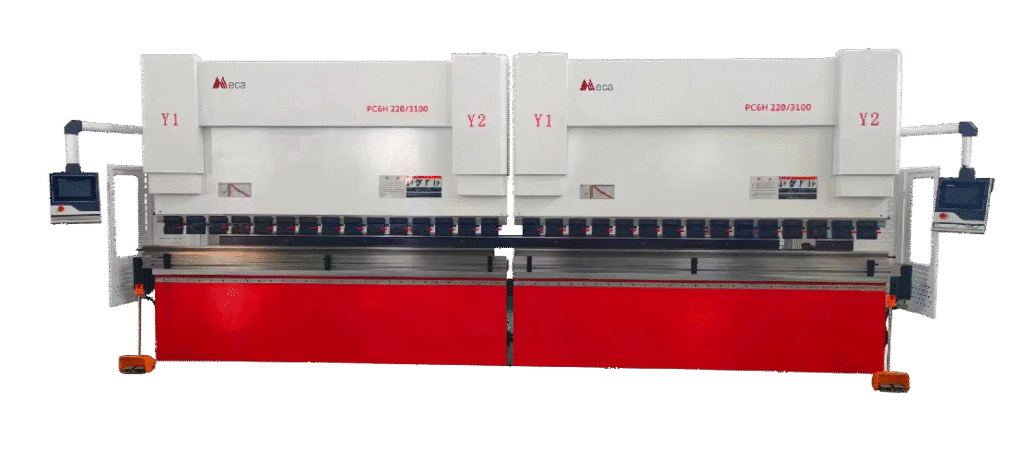
- Long workpieces
- Poles, beams & large panels
- Extended bending length
- Heavy-duty applications
Need Help on Selecting a Model?
Send us your material, thickness, bending length and production requirements. Our engineers will recommend a suitable machine
configuration.