4+1 Axis Press Brake versus 6+1 Axis Press Brake Which Is Right for You
Table of Content
This post is also available in:
Español (Spanish) العربية (Arabic) Русский (Russian)
If you work with simple bending tasks and want a straightforward press brake configuration, you often find the 4+1 axis press brake meets your needs. For complex, high-precision parts or diverse applications, you may prefer a 6+1 axis press brake. Consider the following decision factors as you choose: complexity of bending tasks, flexibility, precision, cost, and productivity. The table below shows how each press brake compares on these key points. Think about your production requirements before you decide.
| Decision Factor | 4+1 Axis Press Brake | 6+1 Axis Press Brake |
|---|---|---|
| Complexity of Bending Tasks | Suitable for simple tasks | Ideal for complex and precise bends |
| Flexibility | Limited flexibility | High flexibility for various geometries |
| Precision | Moderate precision | High precision for intricate designs |
| Cost | More cost-effective | Higher initial investment |
| Ease of Use | Generally easier to operate | May require more training |
| Productivity | Suitable for moderate production volumes | Enhanced productivity with automation features |
| Application Suitability | Best for straightforward applications | Suitable for diverse applications |
| Setup Time | Typically quicker setup | May require longer setup time |
Key Takeaways
- Choose a 4+1 axis press brake for simple tasks. It offers reliable performance and is cost-effective for moderate production.
- Opt for a 6+1 axis press brake if you need to handle complex parts. It provides high precision and flexibility for intricate designs.
- Consider your production volume. High volumes benefit from the automation and speed of a 6+1 axis press brake, while lower volumes may suit a 4+1 model.
- Evaluate your budget. A 4+1 axis press brake is more affordable and easier to maintain, while a 6+1 model requires a higher investment but offers advanced capabilities.
- Plan for future needs. A 6+1 axis press brake supports automation and adapts to changing production demands, making it a smart long-term investment.
Quick Comparison
Features Overview
When you compare press brake models, you notice clear differences in their axis configurations and capabilities. The 4+1 axis press brake uses Y1, Y2, X, R, and V axes. The 6+1 axis press brake adds Z1 and Z2 axes, which allow for more advanced movements. You can see how these features stack up in the table below:
| Feature | 4+1 Axis Press Brake | 6+1 Axis Press Brake |
|---|---|---|
| Axes | Y1, Y2, X, R, V | Y1, Y2, X, R, Z1, Z2, V |
| Backgauge | Vertical adjustment of backgauge fingers | Lateral movement of backgauge fingers |
| Complexity | Suitable for standard tasks | Ideal for complex parts with multiple bends |
| Flange Handling | Good for varying flange lengths | Excellent for asymmetrical designs |
You get more flexibility with the 6+1 axis press brake. The extra axes help you handle intricate bends and asymmetrical parts. If you work with standard jobs, the 4+1 axis press brake gives you reliable performance and easier operation.
Benefits Summary
You want to choose a press brake that matches your production needs. The table below highlights how each type performs in speed, accuracy, and application:
| Feature | 4-Axis Press Brake | 6-Axis Press Brake |
|---|---|---|
| Axes | X, R, Y | X, R, Z1, Z2, Y1, Y2 |
| Ideal for | Medium complexity jobs, repetitive parts | Precision and speed for complex geometries |
| Setup Speed | Increased setup speed | Faster setup for varying jobs |
| Accuracy | Improved control over flange positioning | Essential for asymmetrical or complex bends |
| Applications | Multi-bend parts | High-efficiency production environments |
Tip: If you need to produce high volumes of complex parts, the 6+1 axis press brake offers greater speed and precision. For simpler, repetitive tasks, the 4+1 axis press brake saves you time and cost.
You can see that each press brake serves a different purpose. The 4+1 axis press brake works best for straightforward jobs and moderate production. The 6+1 axis press brake excels when you need advanced flexibility and accuracy for demanding applications.
4+1 Axis Press Brake
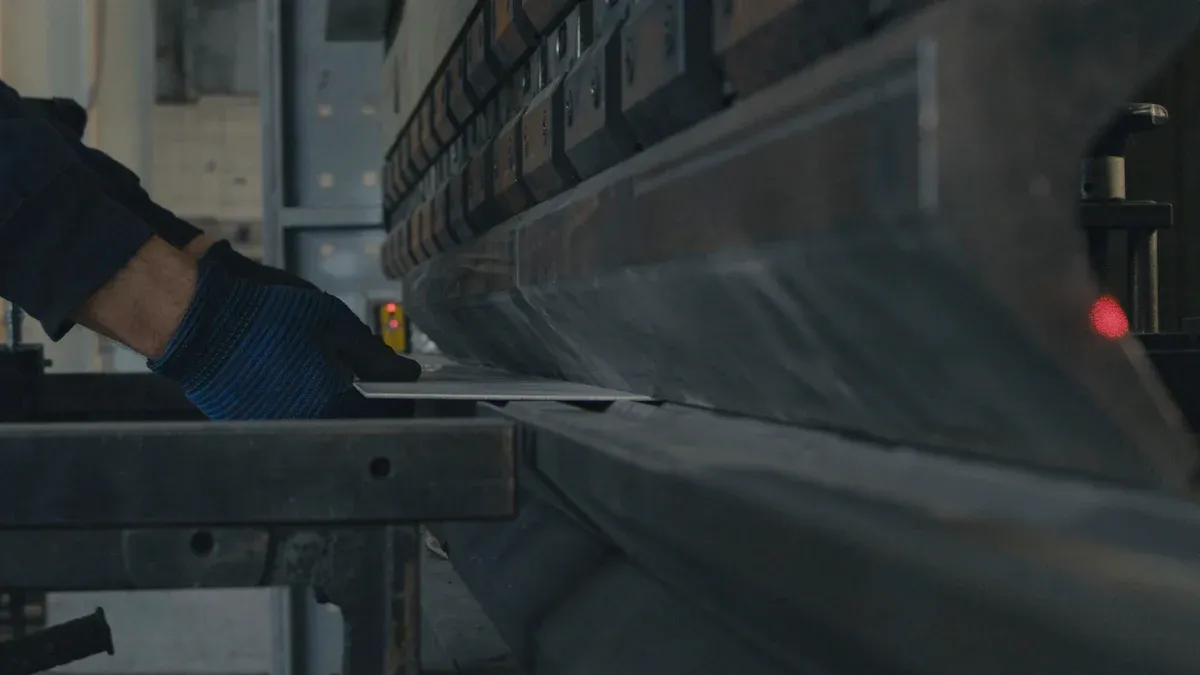
4-Axis Press Brake Features
You often see the 4+1 axis press brake as the standard in many metal fabrication shops. This press brake uses a specific axis configuration that includes Y1, Y2, X, R, and V axes. Each axis serves a unique function and helps you achieve accurate bends. The table below shows how each axis works:
| Axis | Function |
|---|---|
| Y1 | Independent control of ram cylinder |
| Y2 | Independent control of ram cylinder |
| X | Horizontal movement |
| R | Vertical adjustment of back gauge |
| V | Back gauge adjustment |
This axis configuration gives you control over the ram and back gauge. You can adjust the position and height of the back gauge fingers. You also get precise movement for each bend. The 4-axis press brake design makes setup easy and helps you work faster.
Strengths
You gain several advantages when you use a 4+1 axis press brake. The axis configuration improves your bending precision and flexibility. You can handle parts with different flange lengths and create multiple bends in one setup. The table below highlights the main benefits:
| Benefit | Description |
|---|---|
| Precision | Enhances bending precision |
| Flexibility | Allows for varying flange lengths and multiple bends |
| Efficiency | Improves manufacturing efficiency and reduces setup times |
Note: The vertical adjustment of the back gauge fingers (R axis) lets you position material for each bend. This feature increases your accuracy and reduces errors.
Best Uses
You should choose a 4+1 axis press brake for jobs that need reliable performance and moderate complexity. Common applications include:
- Producing parts with varying flange lengths
- Creating components that require multiple bends
- Handling repetitive tasks with consistent quality
- Manufacturing brackets, panels, and enclosures
The 4-axis press brake stands out as the general standard because it balances cost, ease of use, and versatility. You can complete most bending tasks without extra training or complex setup. This press brake fits well in shops that want efficiency and dependable results.
6-Axis Press Brake
Multi-Axis Press Brake Features
You find that a 6-axis press brake stands out because of its advanced axis configuration. The machine includes Y1, Y2, X, R, Z1, Z2, and V axes. The Z1 and Z2 axes play a key role in boosting your bending capabilities. These axes control the lateral movement of the backgauge fingers. You can position each finger independently, which helps you handle complex parts with ease.
| Axis | Function |
|---|---|
| Z1 | Controls lateral movement of backgauge fingers for precise positioning. |
| Z2 | Allows independent movement of backgauge fingers, enhancing capability for complex parts. |
You use the multi-axis press brake to create intricate, non-linear bends and asymmetrical designs. The independent movement of the backgauge fingers lets you set up jobs that would be difficult or impossible with a simpler press brake.
Advantages
When you choose a 6-axis press brake, you gain several important benefits:
- CNC-controlled back gauges minimize human error, so you get consistent and accurate bends every time.
- Pre-programmable setups allow you to achieve surgical accuracy, even when you repeat jobs.
- Multi-axis back gauges help you tackle complex tasks like reverse flanges and off-center bends.
- Adjustments in multiple directions make it easier to handle intricate bending jobs.
- Each additional axis increases your ability to manage complex bending tasks.
- You can produce non-linear bends and asymmetrical parts that a standard press brake cannot handle.
Tip: If you want to boost your shop’s flexibility and precision, a 6-axis press brake gives you the tools you need for advanced metal forming.
Ideal Applications
You should consider a 6-axis press brake if you work with demanding projects. This machine fits best in environments where you need high performance and versatility. You can use it for:
- Manufacturing parts with complex geometries
- Producing asymmetrical components
- Handling jobs that require multiple bends in different directions
- Creating prototypes and custom designs
- Increasing productivity in high-volume production
A multi-axis press brake helps you meet strict quality standards and adapt to changing customer needs. You can take on jobs that require advanced setups and deliver precise results every time.
Key Differences
Precision & Complexity
When you choose a press brake, you need to think about how complex your parts are and how much precision you require. The number of axes in your machine directly affects what you can achieve.
- A 4+1 axis press brake gives you reliable accuracy for most standard jobs. You can handle parts with moderate complexity, but you may struggle with intricate bends or non-linear shapes.
- A 6+1 axis press brake lets you create highly complex parts. You can make precise, multi-directional bends and work with asymmetrical designs. The extra axes, especially Z1 and Z2, allow you to move each back gauge finger independently. This feature helps you position material exactly where you need it.
Here is a quick comparison:
| Press Brake Type | Axes Configuration | Suitable for Complex Parts |
|---|---|---|
| 4+1 Axis | X, R | Limited flexibility for complex bends |
| 6+1 Axis | Y1, Y2, X, R, Z1, Z2, V | High flexibility for intricate bends |
If you often work with detailed or custom parts, a 6+1 axis press brake gives you the control you need.
Flexibility
Flexibility matters when your jobs change often or you need to switch between different part designs.
- With a 4+1 axis press brake, you get enough flexibility for most routine tasks. You can adjust the back gauge for different flange lengths, but you may find it hard to handle parts with unusual shapes.
- A 6+1 axis press brake offers much greater flexibility. You can move each back gauge finger side-to-side, which helps you set up for complex or asymmetrical parts. This feature makes it easier to take on new projects or meet special customer requests.
You will notice that the 6+1 axis press brake adapts quickly to changes in production. You can program the machine for a wide range of jobs without major adjustments.
Setup & Operation
The way you set up and operate your press brake affects your workflow and training needs.
- A 4+1 axis press brake is easier to learn. You can set up jobs quickly, and most operators can master the controls with basic training.
- A 6+1 axis press brake requires more skill. You need to understand mechanical principles, measuring, and safety. You also need to know how to use computer controls and program the machine. Training for a 6+1 axis press brake covers many areas, including quality control, daily maintenance, and troubleshooting.
Here is a summary of the training requirements for a 6+1 axis press brake:
| Training Requirement | Description |
|---|---|
| Basic mechanical knowledge | Understand mechanical principles and perform basic repairs and adjustments. |
| Math and measuring skills | Use math and measuring tools for accurate bending. |
| Safety awareness | Follow safety rules and procedures. |
| Basic computer operation ability | Use computer systems for modern press brake controls. |
| Press brake basic knowledge | Know the type, structure, and working principles. |
| Operation skill training | Set parameters, replace dies, and control operations. |
| Programming and control system | Program and control NC and CNC systems. |
| Quality control | Maintain product quality and understand quality standards. |
| Safety operation | Identify risks and follow emergency procedures. |
| Daily maintenance and troubleshooting | Perform maintenance and fix problems. |
| Practical internship | Get hands-on practice to connect theory with real work. |
You should plan for extra training time if you want to use a 6+1 axis press brake in your shop.
Cost & Maintenance
Cost is a major factor when you decide which press brake to buy. Maintenance also affects your long-term investment.
- A 4+1 axis press brake usually costs less. The typical price is around $19,188.00. You spend less on training and maintenance because the machine is simpler.
- A 6+1 axis press brake costs more at the start. You also need to budget for extra training and possible maintenance. The advanced features and extra axes mean more parts to care for and more time spent on upkeep.
Here are the main points to consider:
- The 4+1 axis press brake is more affordable and easier to maintain.
- The 6+1 axis press brake has a higher price tag but gives you more capabilities.
- You may save money in the long run if you need to produce complex parts or handle many different jobs.
Think about your current and future needs before you invest in a new press brake. The right choice depends on your budget, the types of parts you make, and how much flexibility you want.
Choosing a Press Brake
Selecting the right press brake for your shop requires careful thought. You need to match your machine to your production needs, part complexity, budget, and future goals. This guide helps you make an informed decision.
Production Volume
You should start by looking at your production volume. The number of parts you make each day or week affects which press brake fits best.
- High production volumes demand machines with more axes and advanced automation. These features boost efficiency and reduce manual work.
- If you run simple, high-volume jobs, a basic press brake with fewer axes may be enough. Some shops use a 2-axis machine for straightforward, repetitive tasks.
- When you produce complex parts in smaller batches, you benefit from a multi-axis press brake. Features like independent ram control and crowning compensation help you maintain quality and accuracy.
Tip: If your orders change often or you handle many custom jobs, a press brake with more axes gives you the flexibility to keep up.
Part Complexity
The complexity of your parts plays a big role in your choice. You need to consider the shapes, bends, and features your parts require.
- A 6-axis press brake works well for intricate designs. You can manage multi-bend operations with ease.
- If you make complex or asymmetrical parts, a 6+1 axis press brake stands out. The extra axes allow for lateral movement, so you can create detailed bends that a standard machine cannot handle.
- For simple parts with basic bends, a 4+1 axis press brake gives you reliable results without extra setup.
You should match your press brake to the most challenging parts you expect to produce. This approach ensures you never fall short when a tough job comes in.
Budget
Your budget sets the limits for your press brake purchase. You need to balance cost with your current and future needs.
- Higher-axis machines come with increased prices. Each additional controlled axis adds to the cost and complexity.
- You should weigh your budget against realistic projections of future job requirements. Think about the types of parts you want to make in the next few years.
- Shop owners and managers often consult with press brake operators before making a final decision. This teamwork helps you plan for future purchases and upgrades.
Note: A lower-cost press brake may save money now, but it could limit your ability to take on new work later.
Future Needs
You should always look ahead when choosing a press brake. Manufacturing trends point toward more automation, digitalization, and connectivity.
- The future of press brake technology includes real-time insights into machine performance. These features help you boost productivity and lower your environmental impact.
- Industry 4.0 technologies allow you to connect your press brake to other systems. You gain better control and faster response times.
- Modern CNC press brake systems focus on high precision, speed, efficiency, and flexibility. Multi-axis control is becoming the standard for shops that want to stay competitive.
- Automation and CNC integration improve quality and reduce cycle times. You can meet customer demands for high efficiency and lower operational costs.
If you want your shop to grow, invest in a press brake that supports new technologies and advanced features.
Decision Guide Table
| Priority | Best Press Brake Choice | Why This Choice Works |
|---|---|---|
| High production | 6+1 axis press brake | Handles large volumes with speed and automation |
| Simple, repetitive | 4+1 axis press brake | Cost-effective and easy to operate |
| Complex parts | 6+1 axis press brake | Manages intricate bends and multi-bend operations |
| Tight budget | 4+1 axis press brake | Lower initial cost and easier maintenance |
| Future growth | 6+1 axis press brake | Supports automation, digitalization, and flexibility |
Remember: The right press brake helps you meet today’s needs and prepares you for tomorrow’s challenges.
Applications
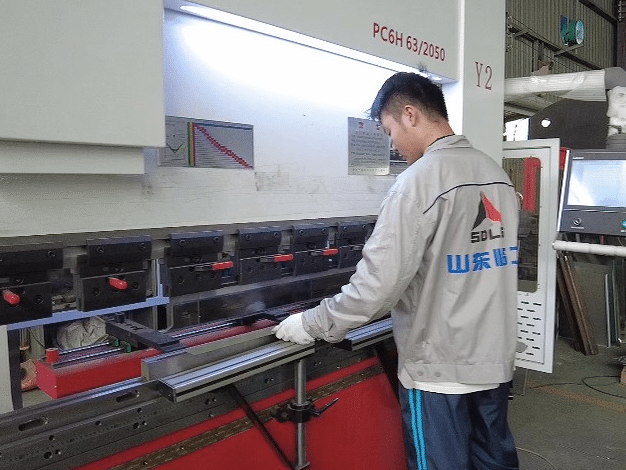
4+1 Axis Press Brake Examples
You often use a 4+1 axis press brake in shops that make everyday metal parts. You can bend panels for electrical enclosures. Many workers choose this press brake when they need to produce brackets for shelving or supports for HVAC systems. You might see it in a workshop that builds cabinets or toolboxes. Operators rely on this press brake for tasks like forming simple trays, boxes, or covers. You can set up the machine quickly and repeat the same bends with little effort.
Tip: If you work with parts that have straight bends and standard shapes, you will find the 4+1 axis press brake saves time and reduces mistakes.
Some common scenarios include:
- Making mounting plates for machinery
- Bending sheet metal for furniture frames
- Producing automotive panels with basic bends
- Forming metal signage or display stands
You can complete these jobs with consistent quality. The 4+1 axis press brake gives you enough control for most routine tasks.
6-Axis Press Brake Examples
You use a 6-axis press brake when you need to create complex shapes or handle advanced projects. This machine helps you bend parts with multiple angles or asymmetrical features. You might work in industries that demand high precision and flexibility. Many companies in power sports, industrial equipment, and elevator manufacturing rely on this press brake. You also see it in airport ground support, currency production, and public transit.
Here is a table showing industries that use 6-axis press brakes for complex part fabrication:
| Industry |
|---|
| Power Sports |
| Industrial Equipment |
| Elevator Manufacturing |
| Airport Ground Support |
| Currency Production |
| Public Transit |
| Fluid Technologies |
| Architectural Applications |
| Glass Manufacturing |
| Alternative Energy |
| Heavy Equipment |
| Agriculture |
| Commercial Food Equipment |
| Construction |
| Lawn and Garden |
| Material Handling |
| Military |
| Rail |
You might need a 6-axis press brake to make custom brackets for rail systems or intricate panels for military vehicles. You can form glass supports for architectural projects or create parts for alternative energy systems. This press brake lets you adjust each backgauge finger, so you can handle jobs with unusual shapes or tight tolerances.
Note: If your work involves prototypes, high-volume production, or parts with complex bends, you will benefit from the advanced features of a 6-axis press brake.
You should review your priorities before choosing a press brake. Precision, flexibility, and cost all shape your decision. If you need accurate bends, a reliable bending ram, or advanced flexibility, match your machine to your project needs. Experts recommend evaluating these factors:
| Factor | Description |
|---|---|
| Tonnage Requirements | Maximum force for material thickness and type. |
| Bending Length | Maximum length for large-scale projects. |
| Backgauge System | Accurate positioning for consistent bends. |
Consider consulting a supplier and checking your tooling system compatibility. Look for quick-change options and easy setup to boost productivity.
FAQ
What does the “+1” mean in a 4+1 or 6+1 axis press brake?
You see “+1” refer to the crowning axis. This axis helps you adjust the table to compensate for deflection during bending. You get more consistent results and better accuracy for each part.
Do you need special training to operate a 6+1 axis press brake?
You benefit from extra training for a 6+1 axis press brake. You learn to program the machine, set up complex jobs, and maintain safety. Most shops offer hands-on instruction and computer-based tutorials.
Can you upgrade a 4+1 axis press brake to a 6+1 axis model?
You cannot easily upgrade a 4+1 axis press brake to a 6+1 axis model. The machine design and control system differ. You should choose the right model based on your current and future needs.
How often should you perform maintenance on a multi-axis press brake?
You should follow the manufacturer’s schedule for maintenance. Most shops inspect and lubricate the press brake weekly. You check for wear, clean moving parts, and test safety systems to keep the machine running smoothly.